

Guinea Revokes Bauxite Mining License of Emirates Global Aluminum, Citing Failure to Build Refinery
On 4 August 2025, the Government of Guinea issued a decree to revoke the mining license of Emirates Global Aluminum (EGA) and transferred it to newly created state entity Nimba Mining Company. Official sources cited violation of the Mining Law since EGA failed to implement a refinery in due time.
A spokesperson from EGA qualified the move as ‘an illegal takeover’ and ‘a de facto expropriation’. In July 2025, the military regime terminated the original agreement with Guinea Alumina Corporation (GAC), the subsidiary of EGA. Initially, GAC committed to build an alumina refinery which was planned to be operational in 2022, but no material progress has been noted.
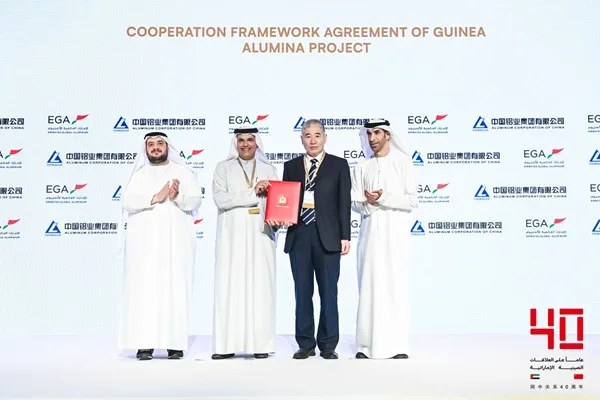
In June 2024, EGA and Chinalco actually signed an agreement to develop the alumina refinery in Guinea. Talks between the Guinean government and EGA thus managed to push the deadline till 30 September 2026, but it would seem that things took a turn south lately.
In October 2024, the Government of Guinea first suspended the bauxite export license of GAC in a bid to have the refinery see the light sonner. Across Africa, governments have been inciting mining investors and operators to generate more value locally (#LVA) and the military governments in West Africa appear to be ‘more aggressive’ in their approach.
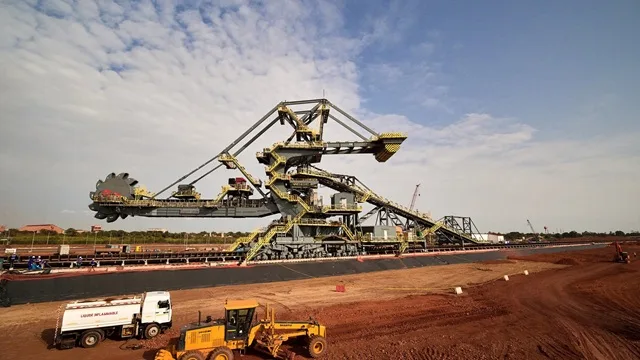
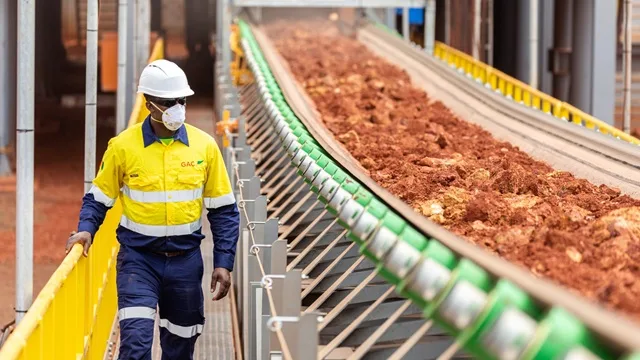
GAC also underlines that the transfer of ownership was carried out without any compensation which goes against good business practices and may create a negative mood for future investments. The impact of this nationalization is significant as GAC accounts for nearly 3% of the global bauxite supply. Some 2,000 employees and contractors now face uncertainly, despite assurances from the Government.
Guinea is the largest producer of bauxite in the world and exported more than 130 million tonnes of the aluminum ore in 2024. According to the US Geological Survey, Guinea has the world’s largest reserve of bauxite estimated at 7.4 billion tonnes.
It is worth noting that certain military regimes in West Africa have been nationalizing mining assets recently. In June 2025, Mali’s junta took over one of Africa’s largest gold mine, which was under the control Canada’s Barrick Mining, citing tax backlogs. In the same month, Niger’s military government seized French Orano’s uranium mine, citing overstep in ownership limits.
On a related note, US President Trump has indicated the USA wants closer control of the global supply chain of certain critical commodities such as aluminum, steel and copper. To that regard, he has imposed a global 50% custom duty on the import of these strategic metals.
The new regimes aver they are simply reviewing non-compliant mining titles and executing clauses in the Mining Law, some recently enacted. From a broader perspective, the nationalization drive is perceived as a concerted and deliberate effort to control strategic mining assets and to maximize revenue.