

World Bank to Support for Mozambique’s $6B Mphanda Nkuwa Dam
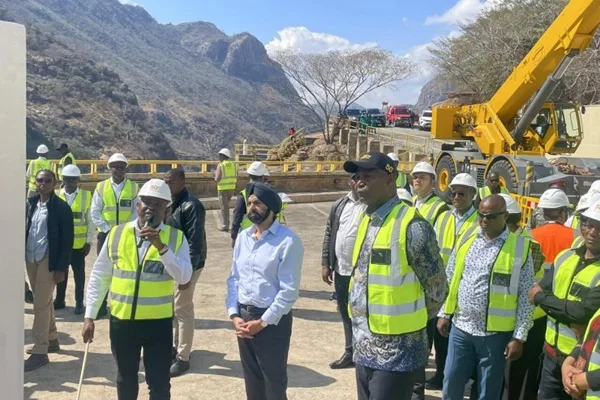
After a site visit to Mozambique, World Bank President Ajay Banga expressed support for the Mphanda Nkuwa Hydroelectric Power Plant (#HPP) project. The Project is estimated to cost USD 6 billion and its full 1.5 GW capacity will come online by 2030 if all goes smoothly. At this stage, all the necessary studies are nearly completed.
Through IFC and IDA, the WB is expected to provide partial debt and equity funding to the tune of USD 1.4 billion, which will most likely go toward the transmission line (#TL) component of the Project. The support of the World Bank also comes in the form of guarantees from IBRD and political risk insurance from MIGA. The Project is a flagship under the #M300 initiative to power Africa.
The European Investment Bank has also agreed in principle to provide a $350M support specifically for the transmission network. Of out the $6B, 60% is for generation and 40% is necessary to the transmission infrastructure.
“We want to be the hub of energy in our region, the Southern African Development Community (SADC).”
Mozambique President Daniel Chapo
In addition to powering local communities, the Mphanda Knuma HPP plans to sell excess power to neighboring Zimbabwe and South Africa through the Southern Africa Power Pool (#SAPP). The Project includes a 550 kV high-voltage line which is 1,300 km long for regional transmission, and another 400 kV, 650 km line destined for domestic transmission.
The Mphanda Nkuma dam is on the Zambezi River, downstream form the larger 2 GW Cahora Bassa dam, built in 1974 during the Portuguese colonial rule. 60% of Cahora Bassa’s electricity is exported to South Africa, reflecting the mindset at the time. Actually, the Zambezi River full hydropotential remain underexploited with more dams possible.
Mozambique is also looking to convert its abundant sunshine into energy with a 400 MW utility-scale solar farm in the pipeline. Discussions with the World Bank is ongoing on financial support.
The Mphanda Nkuma dam is being built by an international consortium of companies comprising Electricite de France, TotalEnergies, Sumitomo, and the Government of Mozambique.