
BRICS Pilots Gold-Backed Cryptocurrency Called Unit
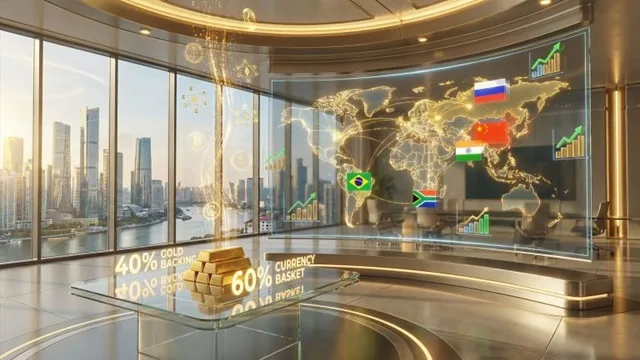
On 4 December 2025, the Institute for Economic Strategies of the Russian Academy of Sciences (IRIAS) announced the launch of a prototype BRICS currency, called the Unit. The currency is backed by gold, with 40% of physical #gold and 60% of BRICS national currencies. As a cryptocurrency, the Unit also uses the latest FinTech and #blockchain technologies, making it particularly convenient and fluid for cross-border transactions.
For the record, IRIAS first issued 100 Units on the 31st of October, 2025, with each Unit backed by one gram of gold and the rest equally weighted among the currencies of the original five BRICS member states.
The launch of the BRICS Cryptocurrency follows the operationalization of #BRICSPay, which allows cross-border payments via digital versions of national currencies. Basically, BRICS Pay integrates the national payment gateways, such as Russia’s SPFS, India’s UPI, and China’s CIPS, to enable international transfers without resorting to SWIFT. At the same time, the BRICS is building a decentralized financial network connecting Central Banks based on #Blockchain and digital currencies, codenamed Bridge.
For some time now, the BRICS have been promoting the use of national currencies to settle international trade bills. This type of arrangement works well when the trade flow is more or less balanced, as is the case between Russia and China. In the case of Russia and India, Russia enjoys a huge USD 60 billion surplus, and settlement via national currencies is not workable. Hence, the Unit.
In an interview during his official visit to India, Putin declared that rushing into a common currency could be a serious mistake as several countries were economically unprepared.
Certain experts believe it is a little too early to bid farewell to the mighty dollar, but the #dedollarization trend is likely to create a tectonic shift in global finance and trade. Already, the move has pushed gold prices to record prices. China has also been gradually reducing its exposure to US T-bills, as a harbinger for a post-dollar world order.