
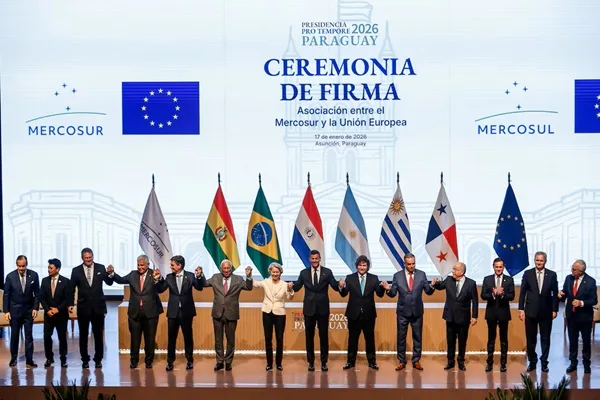
EU and Mercosur Finally Sign FTA After 25+ Years of Talks
On 17 January 2026, the European Union (EU) and #Mercosur signed a Free Trade Agreement after more than 25 years since negotiations first started. Some observers note that the success can be attributed to the US President Trump’s negative stance toward long-time allies in Europe, who are scrambling to ‘derisk’ from the USA. Trump has accused the EU of ‘taking advantage’ of the US, urged European allies to contribute more to NATO, and threatened to take Greenland by ‘one way or another.’
In a show of goodwill and expression of commitment, European Commission President Ursula von der Leyen and European Council President Antonio Costa traveled to Asuncion, Paraguay, to sign the Free Trade Agreement (#FTA).
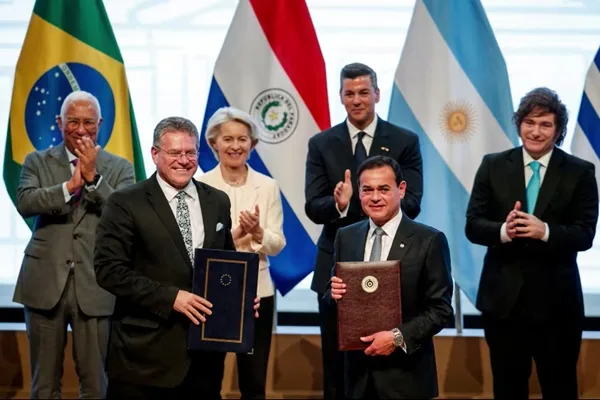
In her speech, European Council President Ursula von der Leyen underscored that the EU has made a clear and deliberate choice to uphold fair trade over tariffs. However, Austria, France, Hungary, Ireland, and Poland voted against the deal, while Belgium abstained. The European Parliament and national legislatures still need to ratify the accord before it comes into effect.
The most strident opposition came from European farmers. As the largest agricultural producer in the EU, France voted against the FTA with Mercursor, fearing being flooded by cheaper agricultural produce from Latin America. Finally, the two sides agreed to a rate-quota system for sensitive products such as beef and poultry. With the FTA, the EU hopes to sell more automobiles and industrial machinery to Mercosur.
The EU-Mercosur FTA covers a market of almost 700 million consumers across Europe and Latin America. The deal calls for 90% of tariffs on both sides to be phased out over time.
In 2024, the EU exported EUR 40 billion to Mercosur, while Mercosur exported EUR 9 billion to the EU, resulting in a bilateral trade volume of EUR 49 billion. Both sides hope the trade volume will get a significant boost when the FTA becomes effective.