
Looking Beyond the Rosy Figure of $348B Trade Between China-and Africa in 2025
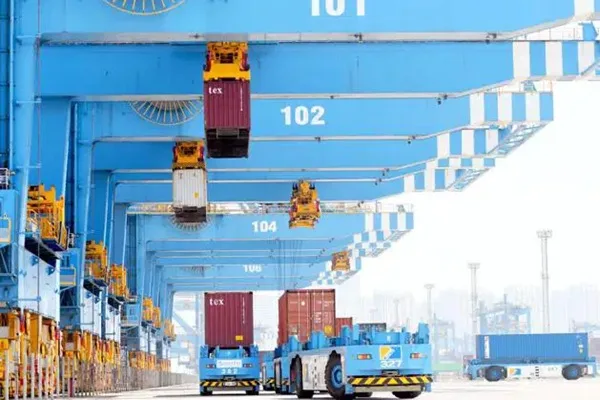
After releasing the China-Africa trade for the first eleven months of 2025, China Customs finally released the full-year figure in mid-January 2026. The trade volume between China and Africa reached USD 348 billion in 2025, representing nearly 18% growth compared to USD 296 billion in 2024.
Each coin has two sides and international trade also has two directions. China’s exports surged upward by 26%, whereas imports from Africa grew by a relatively modest 5%. Overall, the trade deficit for Africa widened to USD 102 billion, up by 65% compared to 2024.
The skyrocketing of Chinese exports to Africa can be partly attributed to the #tariffs imposed by Trump upon China, forcing Chinese manufacturers to find new markets for their goods. However, to gain market access, suppliers have had to apply deep discounts since the purchasing power of Africa is not on par with that of the USA. Due to thinner margins, several international traders have complained about lower commissions in spite of larger volumes.
Despite Wang Yi’s announcement to implement zero-tariff on almost all goods from Africa at the China-Africa Economic and Trade Expo at Changsha in June 2025, it would appear the effect is anemic, to say the least. Certain countries have met with non-tariff barriers (#NTB), such as complicated standard compliance, convoluted sanitary and phytosanitary (#SPS) protocols, in their attempt to enter the Chinese market, which is sold as ‘large and lucrative.’
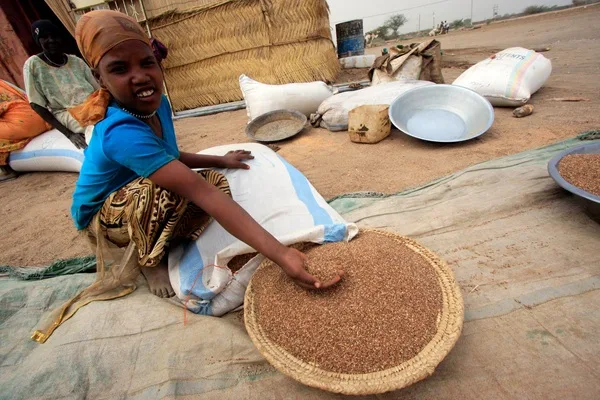
Most of the new growth came from solar products, while traditional product categories such as construction materials continue to do well. Africa continues to export mostly raw mineral resources and unprocessed, low-value-added agricultural produce to China.
Crude oil from Nigeria and Angola, bauxite from Guinea, and copper and cobalt intermediates from DR Congo are some of the top commodities imported by China from Africa. Exports of Ethiopian coffee, Kenyan tea, or Niger’s sesame are comparatively too small in value to make a significant difference.

The China-US trade war provided the conjecture for a re-orientation of Chinese exports to Africa, but the widening deficit points to a structural issue. Indeed, until Africa industrializes and moves up the global value chain, it will be condemned to stay at the lower rungs of the value ladder.
The excess trade surplus enjoyed by China is becoming more and more a cause of friction between China and other countries. Historically, the Opium War was initiated as the British attempted to export more opium to China in order to establish the trade balance.
Nowadays, African policymakers have been calling for more #industrialization and local value addition (#LVA) to address the structural imbalance. Jacques Nel, head of African Economics at Oxford University, notes that African countries can only speak on equal terms to China if they manage to leverage the large single market under the #AfCFTA. Furthermore, African countries should take on a sharper transactional mindset in return for their collective votes in favor of China at multilateral fora, such as the United Nations.