
Unitree’s Share Price Surges More Than Six-Fold on IPO
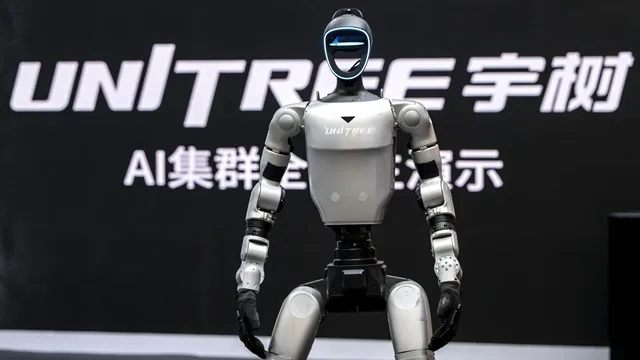
On 18 August 2026, Unitree made its Initial Public Offering (IPO) on the Nasdaq-style Star market of the Shanghai Stock Exchange (SHSE) under the ticker code 688836. On its debut, the company issued 40.45 million shares, representing 10% of its enlarged capital, with a list price of RMB 150.80. During the trading day, the price actually skyrocketed by nearly 630% to flirt with RMB 1,100, before closing at RMB 845.
Unitree, or Yushu Technology, is a pure-play robot maker, and its stock market debut triggered a buying frenzy among investors who see a bright future in robotics enhanced by Artificial Intelligence (#AI). Retail tranches were oversubscribed more than 5,500 times, logging a RMB 8.1 trillion ($1.2T) of order value.
At the end of the hectic day of trading, the IPO managed to raise more than RMB 6 billion ($0.9B). Based on the closing price on IPO day, Unitree’s market cap exceeded RMB 340 billion ($50B), surpassing the valuations of similar players.
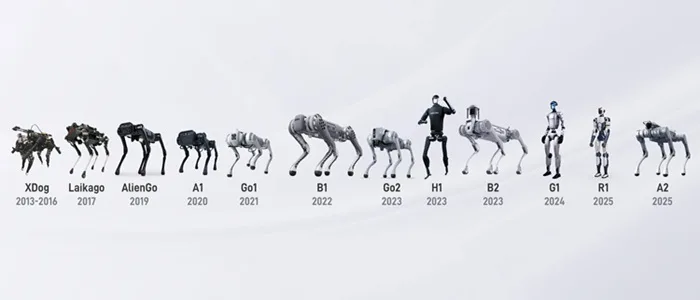
Unitree reported more than a fourfold jump in revenue from RMB 393 million in 2024 to RMB 1,700 million in 2025. In 2025, net profit was RMB 278 million, with over 5,000 robots sold. Its child-sized G1 model, priced at USD 13,500, accounted for half of the total revenues, eclipsing its famous robot dog that was its first product.
In July 2026, following strong lobbying from Boston Dynamics, the US Federal Communications Commission banned the import of Chinese robots, citing security concerns. However, robots already in the country would be allowed thanks to a grandfather clause. International sales accounted for nearly 45% of Unitree’s total business in 2025. Some analysts note that less than 10% of Unitree products are deployed in commercial or industrial settings, and most of them are currently being purchased for their entertainment or research value.
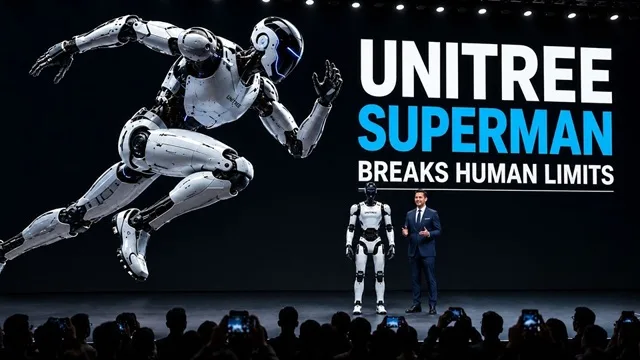
In a publicity stunt before the IPO, Unitree unveiled its Superman model, standing at 2 meters tall, which can sprint and jump over a high hurdle like an Olympic champion. Unitree follows a mass-market good-enough strategy, while Boston Dynamics is pursuing a high-margin premium segment. For comparison, Boston Dynamics’ robotic quadruped Spot retails for more than $70,000, whereas Unitree’s Go2 can be procured for just $1,000.
As Unitree is listed on mainland China’s Star Market, direct access by international retail investors is highly gated. Overseas capital looking to buy Unitree shares might have to go through tech-themed funds.
Several Chinese tech companies supported Unitree by purchasing sizeable portions of its share offering, including Ant Group (Alibaba’s finance arm), Tencent (WeChat parent company), and Meituan (Keeta’s parent company). Notably, DeepSeek was a cornerstone investor in the IPO by committing around RMB 140 million.
Unitree plans to pump the newfound capital mostly into research and development. Three key areas have been identified for Unitree to stay ahead of the curve. Firstly, Unitree will aggressively improve core technologies, including motors and sensors. Then, it will continue to integrate advanced manufacturing vertically to drive down costs. Finally, Unitree will invest about RMB 2 billion into Embodied AI to enhance man-machine interactions.
China is organizing the World Humanoid Robot Games 2026 in Beijing from 22 to 26 August 2026. So far, 2,000 robots from 16 countries have registered to participate to compete to see who will be the champion in various events, including athletics, dancing, and ping pong.