

DFC to Expand Toolkit from Development Finance Institution to Sovereign Wealth Fund
In an interview with Barron’s published on 27 October 2026, DFC Head of Investments, Conor Coleman, underscored the urgency to evolve the modus operandi of the US Development Finance Corporation (DFC) from a Development Finance Institution (#DFI) to be more like a Sovereign Wealth Fund (#SWF) to act fast and at scale.
Recently, the US Congress reauthorized the DFC with a broader and stronger mandate in order to be able to compete with China’s state capitalism model. Indeed, China has managed to mobilize more than USD one trillion for its flagship Belt and Road Initiative (#BRI), and the US is now ready to match China, practically dollar for dollar.
As opposed to the use of public funds of China, the US is favoring the leveraging of private capital. Whereas China relies mostly on policy banks such as the China EXIM (CEXIM) Bank and China Development Bank (CDB) for providing financing, the DFC will focus on bridging the gap between public and private sectors, and let the private sector do what it does best, which is to make money.
To match the scale of China, the #DFC is betting on its multiplier effect and believes that for every dollar that it puts into a project, the private sector will come up with three to five dollars. The highly developed capital of the US and its allied partners are unmatched in terms of raising capital. Congress has actually raised its investment cap of DFC to USD 205 billion. So, multiplying this figure by five, brings it to over USD one trillion, which is close to what China claims to have ploughed into the BRI.
So far, DFC has approved USD 13 billion of deals; next year, DFC plans to finance up to USD 35 billion of projects. Actually, DFC already has more than USD 100 billion of projects in the pipeline. Every year, DFC has the ability to evaluate nearly 200 transactions.
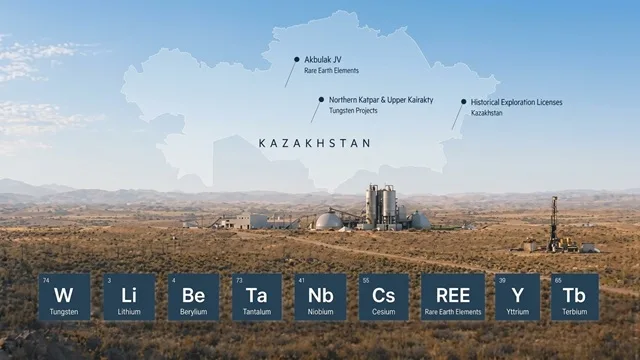
One of the priority mandates of the DFC is to secure access to Critical Minerals or Rare Earths, that are currently under the monopolistic control of China. In this respect, DFC invested $700M in Kazakhtan’s Severniy Katpar Tungsten Mines, $600 in Orion Critical Minerals Consortium, and $565M in Brazil’s Serra Verde Group.
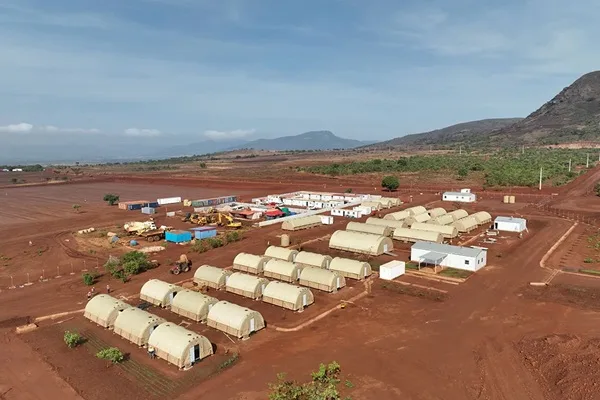
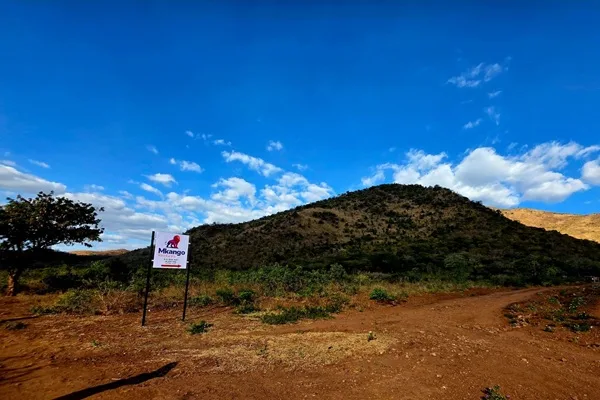
In Africa, DFC is supporting Harena Rare Earths to develop Madagascar’s Ampasindava Ionic Clay Deposits in Madagascar, and Mkango Resources to advance the Songwe Hill Rare Earths project in Malawi, and Pensana PLC to build a rare earths carbonate refining facility in Angola.
The objective of the DFC is for the USA to mitigate the risks of the weaponization of #RareEarths by China. Thus, it is literally leaving no stone unturned around the world to build up= an independent supply chain for critical minerals.