
India and Canada Fast-Track FTA Talks in Bid to Boost Bilateral Trade to $50B by 2030
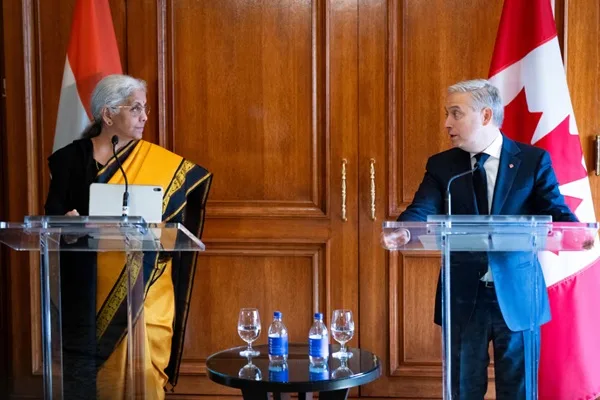
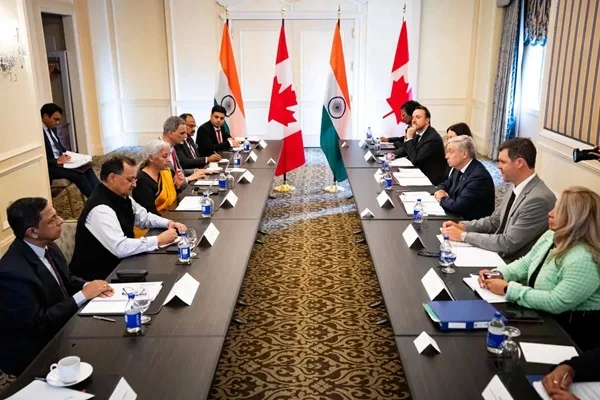
From 26 to 28 August 2026, India’s Finance Minister Nirmala Sitharaman was in Canada to revive talks about a potential Comprehensive Economic Partnership Agreement (CEPA). During her visit, she met with her counterpart, Francois-Philippe Champagne. The two co-chaired the inaugural India-Canada Economic and Financial Dialogue.
During the press conference that followed, Champagne expressed his belief that Canada can contribute to India’s food and energy security, and supply certain Critical Minerals. On the other hand, Sitharaman believes that India can provide talent and technology to Canada.
Both sides are in the midst of diversifying their supply chains in the face of persistent geopolitical uncertainties. The trade talks between Canada and India coincide with the breakdown of negotiations between Canada and the USA.
It is estimated that the Indian Diaspora makes up nearly 5% of the Canadian population, with 2 million Canadians of indian origin. In addition, there are more than 400,000 Indian students enrolled in various Canadian educational institutions. However, the Indian immigration wave into Canada has dropped significantly from its high of 140,000 arrivals in 2023.
On the other hand, both sides agree that bilateral trade still has room to grow. For 2025, the bilateral trade volume stands at just under USD 11 billion, with India enjoying a USD 3 billion surplus. India exports mainly chemicals, pharmaceuticals and electronic equipment, while Canada ships mineral ores, diamonds, potash, and wood products to India.
On the technological side, India proposed deploying of the Unified Payment Interface (UPI) based on the latest FinTech. The UPI will greatly ease cross-border remittances for Indians back home and simplify money transfers from Indian parents to their kids studying in Canada. UPI will be a central factor to spur trade and investment between the two countries by facilitating international financial flows.
On the subject of Critical Minerals, Canada and India already signed a contract valued at nearly USD 2 billion, whereby Canada would supply India with uranium for civilian nuclear use. Canada is an important source of potash, graphite, lithium, cobalt and nickel to India, which is eager to diversify from China.
Furthermore, India and Canada are also negotiating a Bilateral Investment Treaty (BIT). India would like to attract more investments from Canadian pension funds, which are already the largest source of funds for infrastructure development in India. Thus, the Treaty would provide greater certainty with a formal regulatory framework.
Both sides are confident that the CEPA could be concluded by the end of 2026. The next meeting is scheduled for 2027. India and Canada have set the ambitious goal of raising the bilateral trade volume to USD 50 billion by 2030.