
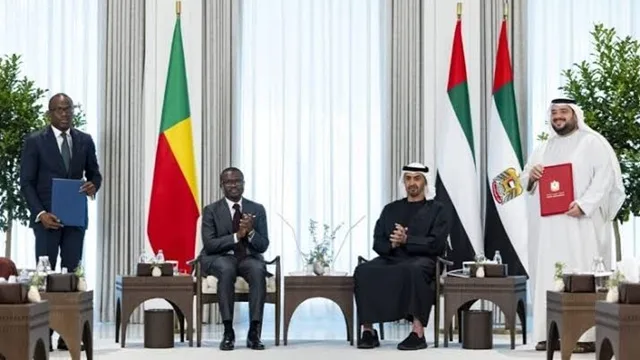
Benin and UEA Sign Comprehensive Economic Partnership Agreement
On 25 October 2026, Benin and the United Arab Emirates signed a Comprehensive Economic Partnership Agreement (CEPA) in Abu Dhabi. Benin’s Minister of Foreign Trade Minister Olushegun Bakari and UEA Minister of State for Foreign Trade Thani bin Ahmed Al Zeyoudi signed the instrument in the presence of Benin’s President Romuald Wadagni and the UAE’s President Mohamed bin Zayed Al Nahyan.
With the CEPA, Benin will enjoy duty-free access to the UAE market for more than 8,000 product categories. The Free Trade Agreement (FTA) actually covers more than 97% of bilateral trade. Actually, bilateral trade surged by 65% to reach USD 2.2 billion in 2025, excluding oil. Thanks to the CEPA, it is projected that bilateral trade will increase by over USD one billion by 2033.
Currently, Benin’s exports to the UAE consist mostly of cotton, cashew nuts, shea nuts, soybeans, and gold. to the UAE. Other than petroleum, the UAE exports machinery, electronics and rice to Benin.
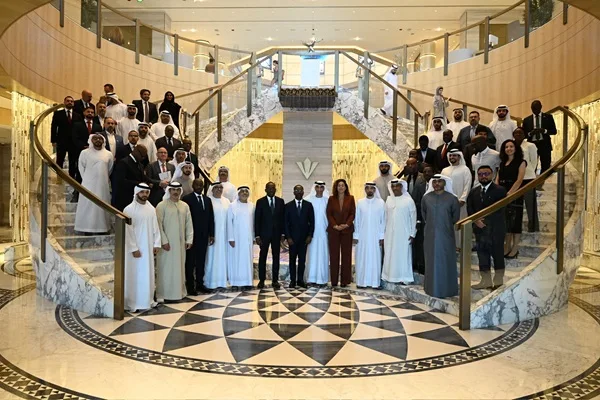
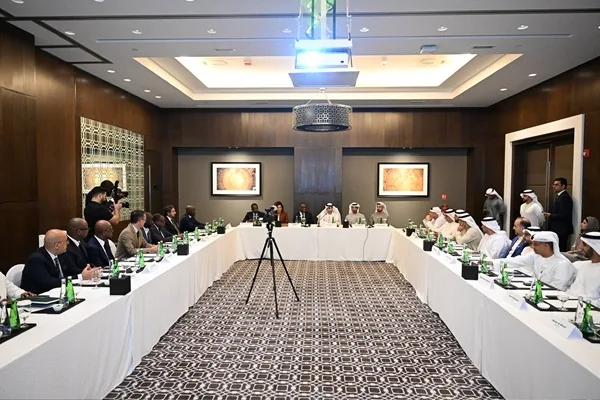
During the state visit, both sides held a UAE-Benin High-Level Roundtable in Abu Dhabi. Benin pitched the Glo-Djigbe Industrial Zone (GDIZ) to and invited UAE investors to build factories to support the local value creation policy. Actually, UAE companies have already invested in the textile sector in Benin, leveraging Benin’s high-quality domestic cotton production.
The UAE views Benin as a gateway to West Africa, while Benin plans to use the UAE as a springboard into the Gulf region. DP World has a massive port project in neighboring Nigeria and is contemplating integrating Benin into the wider West African logistical network. Benin has one of the highest economic growth rates in Africa, clocking 7.5% growth in 2025.