
Africa Turning Toward Nuclear Power as Part of Decarbonization Drive
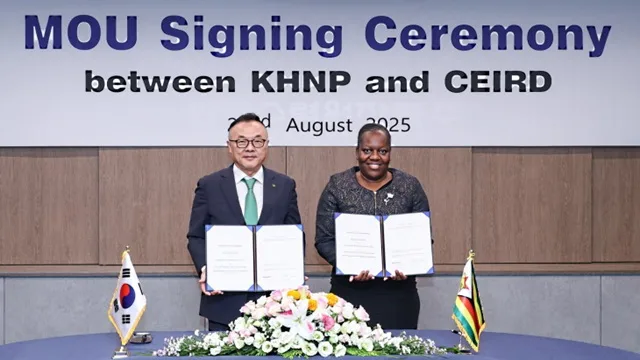
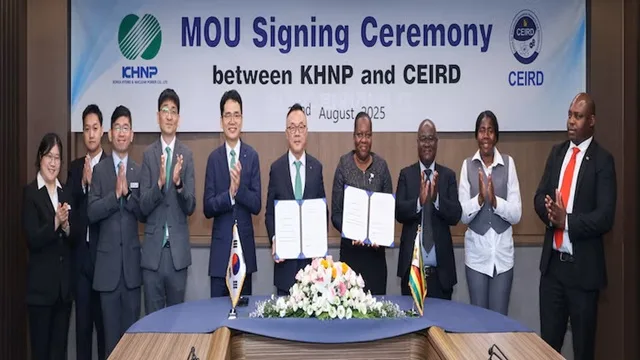
Toward the end of August 2025, the Zimbabwean Center for Education, Innovation Research and Development (CEIRD) and Korea Hydro and Nuclear Power (KHNP) signed a MoU to undertake transfer of know-how and capacity building for nuclear power technology. The agreement also covers a feasibility study for a 190-MW small and modular reactor (SMR) , which is a good stepping stone for countries starting on the journey on the nuclear energy path as a way of #decarbonization.
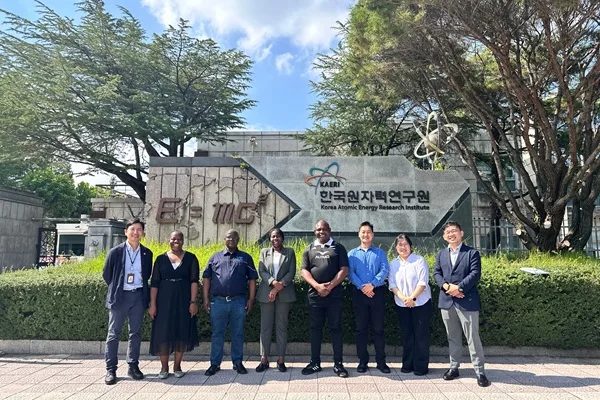
The signature follows a visit led by a delegation led by the CEO of CEIRD to the Korea Atomic Energy Research Institute (KAERI) earlier this month. During the trip, the Zimbabwean delegation had the opportunity to visit the High-flux Advanced Neutron Application Reactor (HANARO) in order to take cognizance of the Korean nuclear capabilities.
Back in 2021, Zimbabwe already signed an MoU with Russian national nuclear company Rosatom to deploy small nuclear reactors. At the time, Zimbabwean Minister of Energy Edgar Moyo declared that Zimbabwe plans to boost its power generation capacity up to at least 4 GW by 2035, from the current 2.6 GW. As for KHNP, it is promoting its SMR all over the world and has so far signed partnership agreements with Indonesia, Jordan and Norway.
In 2024, Ghana signed a similar agreement with US firm NuScale Power. Burkina Faso also struck a similar deal with Rosatom in 2023. At the moment, Egypt is building a 4.8 GW nuclear power plant in El-Dabaa to the tune of USD 30 billion thanks to financial and technical support from Russia.
In East Africa, Rwanda is partnering with Dual Fluid to implement a pilot nuclear reactor. Kenya plans to build its first nuclear reactor with a capacity of 300 MW by 2034. Last but not least, Uganda has a 2 GW nuclear plant in the pipeline thanks to its collaboration with Rosatom and the China National Nuclear Corporation (CNNC).
Several African countries have substantial reserves of fissile materials necessary which can be used as nuclear fuel. However, the technical and financial barriers of entry are all quite high. Thus, a small and cost-effective reactor design is more likely to make a breakthrough and to be adopted.
To date, South Africa stood alone as the only African country with a nuclear power plant in operation, but the situation is rapidly evolving with numerous African states considering the nuclear option. Previously, nuclear power suffered a bad press due to the perception of high risk, but attitudes seem to be evolving and uranium-rich, in particular, are looking to leveraging their resources to accelerate the #EnergyTransition. Traditionally, African countries turned to ‘nuclear powers’ such as Russia, USA and China, but new and agile players such as South Korea are also making inroads.
“Through this business agreement, we hope Zimbabwe will accelerate its energy diversification and find sustainable energy solutions through SMRs. Building on our collaboration with Zimbabwe, KHNP will strengthen its position in the African market.”
KHNP Chair KWANG Joo-ho