
AIIB Approves $200M Financing for Sustainable Urban Mobility in Grand Nokoue, Benin
On 16 September 2025, the Asian Infrastructure Investment Bank (AIIB) approved a USD 200 million financing for a Sustainable Urban Mobility Project in Grand Nokoue, Benin. The Project is jointly financed by the World Bank’s International Development Association (IDA) and is backed by a sovereign guarantee.
Grand Nokoue is the main urban area in Benin covering Abomey-Calavi, Cotnonou, Seme-Kpodji, Porto-Novo and Ouidah. Grand Nokoue has a population of about 2.6 million residents, accounting for 20% of the population of Benin. Finally, Grand Nokoue contributes almost one-third to the national #GDP.
Based on current projections, the population will reach 3 million within five years and studies have indicated that the transport system presents a serious bottleneck for socio-economic development. The Project aims to promote #eMobility to nurture a safe, reliable, and climate-friendly transport infrastructure with a lower carbon footprint.
The Project has five main components:
- Improve transport sector governance
- Professionalize transport operators with a focus on safety on roadways and waterways
- Enhance transport services via the operationalization of multimodal and green transport
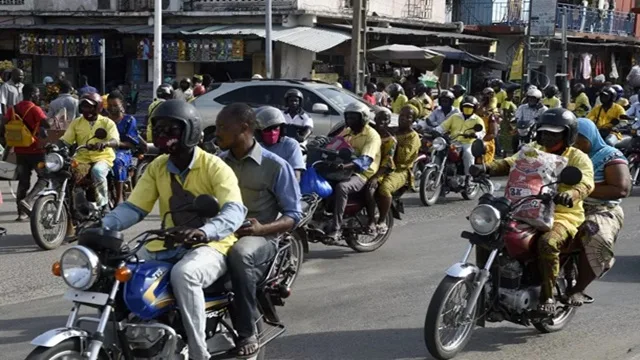
- Electrify motorcycle taxi
- Build capacity and manage project
The Environment and Socio-Economic Impact Assessment (ESIA) is carried out in accordance with the World Bank’s Environmental and Social Framework (ESF), in lieu of the AIIB’s framework, as the two are deemed to be materially consistent.
The WB has categorized the environmental and social risks of the Project as ‘High’ because it can impact the biodiversity-rich lagoon and the wetlands around Lake Nokoue, which is protected under the RAMSAR Convention.
On the social side, the Project involves resettlement and land acquisition with implications for residents and vendors living in the Project areas. A Resettlement Policy Framework and Livelihood Restoration Plan are in the works in order to facilitate the transition.
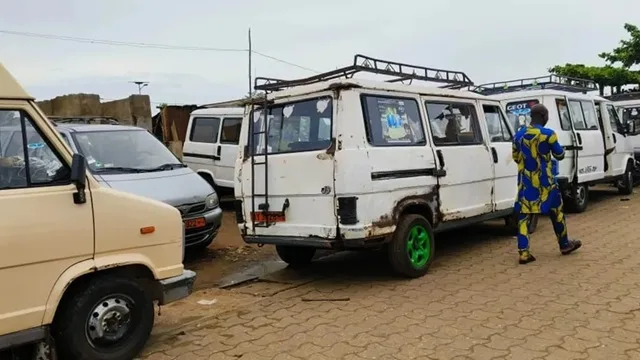
The Project seeks to replace the petrol-powered moto taxis, locally known as Zemidjan or Kekenon, with electric motorcycles. Similarly, the Tokpa Tokpa minibuses will gradually evolve to electric ones. The drivers and operators will benefit from appropriate training to ensure a smooth #EnergyTransition.