

China-Africa Trade Expected to Exceed $330B in 2025 and Flirt With $400B in 2026
According to data released by the Chinese Customs, the China-Africa Trade Volume was USD 314 billion for the first eleven months from January to November 2025, representing a 19% increase over the corresponding period in the previous year, or an average of USD 30 billion per month. Therefore, some analysts believe that surpassing USD 330 billion should not be impossible when the December 2025 figure is factored in.
For 2026, the growth rate is forecasted to remain robust at around 15 to 20 percent. Taking the upper estimate, that would bring the China-Africa trade volume to USD 400 billion.
On the other hand, the China-USA trade experienced a steep slide. The volume is estimated to have dropped from USD 680 billion in 2024 to USD 575 billion in 2025, representing a 18% decrease. The main reason is the trade war between China and the USA, which Trump escalated with its #tariffs policy.
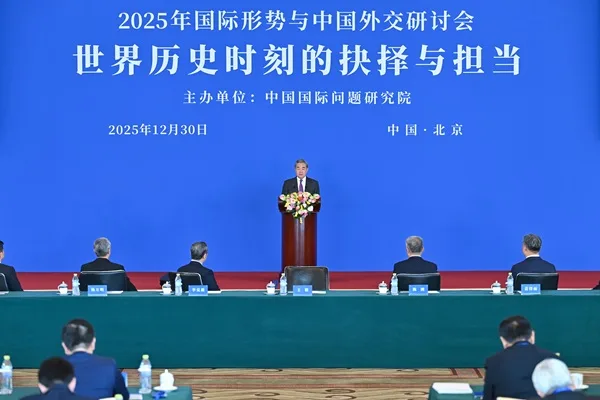
At the end of 2025, while outlining the priorities of foreign affairs, Chinese Foreign Minister Wang Yi underscored that China is ready to ‘support the modernization of Africa’. What that means for China and Africa may depend on one’s perspective. For China, it means developing the African market to compensate for trade losses elsewhere, while for Africa, that means going up the Global Value Chain (#GVC).
In 2026, certain experts believe that PV and EV could be new growth sectors for China-Africa trade. Furthermore, if China allocates part of its industry delocalization to the African continent, then the export of machinery and inputs will also get a boost.
As per tradition, Wang Yi will start the year with an official tour of Africa, underlining the ‘special place of Africa in China’s diplomacy.’ From 7 to 12 January 2026, Minister Wang is scheduled to visit Ethiopia, Somali, Tanzania and Lesotho.
2026 has also been designated the ‘Year of Cultural and People Exchanges between China and Africa’, which will extend the spectrum of China-Africa ties from Government-to-Government (#G2G) to People-to-People (#P2P).