
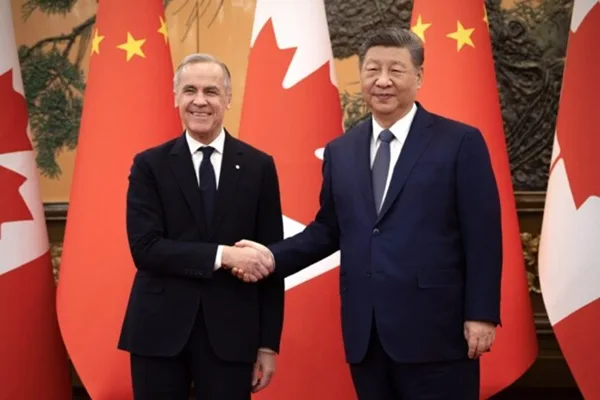
Canada and China Reset Ties By Cutting Deal On Cars and Canola
From 14 to 17 January 2026, Canadian PM Mark Carney was on an official visit to China. In Beijing, he met with Chinese President XI Jinping and Premier LI Qiang. The main outcome of this visit can be summarized as the deal to slash tariffs on Chinese Electric Vehicles (EV) in return for the same on Canadian canola.
Prior to the deal, Canada imposed a 100% tariff on Chinese #EV, basically blocking them on the Canadian market. Under the new deal, a rate-quota of 49,000 vehicles will be charged a 6.1% tariff. Within the next five years, the number of imported Chinese vehicles will be allowed to gradually increase up to 70,000.
On the other hand, China has agreed to reduce its tariff on Canadian #canola from 84% to 15% as from the 1st March 2026. Prior to China’s raised tariff, Canada exported nearly CAD 5 billion worth of canola — including meal and seeds — to China in 2023 and accounted for nearly 70% of Canada’s total canola exports. After China’s tariffs came into effect, the Canadian canola exports to China basically dropped to zero in 2025.
Just a few years ago, during Trudeau’s term, Canada-China relations dipped to an abysmal low after Canada arrested the high-profile Meng Wanzhou, CFO of Huawei and daughter of Huawei Founder Ren Zhengfei, under charges of violating sanctions against Iran. China then imprisoned two Canadians under charges of espionage. The issue was finally resolved through an exchange of prisoners.
Carney’s visit to China occurs in the context of the rift with the USA in a classic case of ‘the enemy of my enemy is my friend.’ After Trump imposed #tariffs on longstanding ally Canada and even expressed the wish to annex Canada as the 51st state of the United States of America, Canada has set the wheels in motion to diversify away from the USA.