
Indo-Pacific Ministerial 2026 Consolidates Energy Security With $60B of Deals Amidst Gulf Conflict
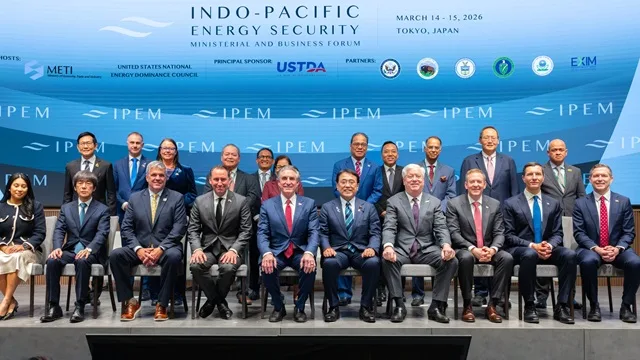
The Indo-Pacific Energy Security and Business Forum (#IPEM2026) took place in Tokyo, Japan, from 14 to 15 March 2026. Japanese Minister of Economy, Trade and Industry (METI), Akazawa Ryosei, and US National Energy Dominance Council Chair, Doug Burgum, co-chaired this edition. The US EXIM Bank, US DFC, JICA, and JBIC were also in attendance to provide financial support. USTR and USTDA were also present to foster the economic diplomacy of the US, and to ensure that decisions are aligned with the #AmericaFirst policy.
Altogether, eighteen countries in the #IndoPacific sent delegations led by ministers or senior officials. India shone by its absence, although some announced deals still involved India. Small island developing states (SIDS) from the Pacific Ocean were also invited, reflecting their geopolitical value.
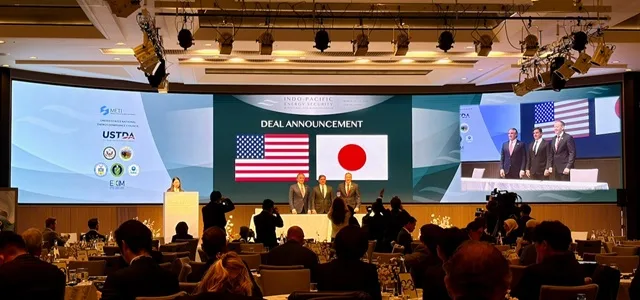
During #IPEM2026, 22 deals were announced, with a total value of USD 57 billion. In the context of the conflict in the Persian Gulf, the deals focused on #EnergySecurity. Discussions also occurred around #CriticalMinerals, Nuclear Energy, Artificial Intelligence, as well as other areas. The flagship deal was the Delfin #LNG off the coast of the State of Louisiana in the Gulf of Mexico, which Trump has renamed as the Gulf of America.
Energy could prove to be a major bottleneck to the boom in #AI data centers. Therefore, several countries came together to pledge up to USD 33 billion to build new generation capacity. In the same breath, mini nuclear plants are envisaged as an option to enhance #ElectricityAccess to certain areas in ASEAN and the Pacific SIDS. The US was quite happy to sign agreements to supply oil and gas to Indo-Pacific allies in view of current disruptions.
In summary, the Forum achieved its aims to secure energy supplies, derisk critical minerals, and boost the construction of related infrastructure. To boost its technological in the nuclear field, the US is promoting small modular reactors (#SMR) as the prime clean energy form, rather than wind or solar.