
Zimbabwe and Chinese Firms Seal Deal for Sandawana Lithium Mine
On 23 July 2026, Zimbabwe’s Mutapa Energy Resources unveiled that it had concluded a deal with a group of companies, including Chinese mining firms, to develop the Sandawana lithium deposit. The group reportedly involves Kuvimba Mining, which historically held the exploitation rights, in partnership with Zhejiang Huayou and Tsingshan, which have been operating in Zimbabwe for a while.
The Sandawana mine has estimated reserves of 2 million tonnes of lithium ore. The deal will bring in USD 300 million in foreign direct investment (#FDI) to implement the mining and processing facilities. Once operational, the target is to process up to 3 million tonnes of ore annually.
“We’re still working on finalizing a few points and making sure that our partners have all the industry conditions necessary to begin construction. We’re looking to break ground in the third quarter of 2026. Our forecast is that lithium prices will recover sometime in the year 2027, right at the point in time when we expect the concentrator plant to be in production.”
Kuvimba CEO Trevor Barnard
The deal is structured as a Build-Operate-Transfer (#BOT) arrangement, whereby the Chinese companies will invest and run the plant for five years before transferring full ownership to Zimbabwe’s state-owned enterprise, Mutapa Energy Resources. Now, Mutapa Energy Resources is owned by Zimbabwe’s Sovereign Wealth Fund (#SWF), Mutapa Investment Fund.
In the meantime, Kuvimba has also started stockpiling ore at Sandawana. Part of the ore extracted is sent to Tsingshan’s plant in Gwanda for processing. The Sandawana mine also distinguishes itself by presenting a pegmatite deposit containing #lithium, tantalum and tin, which increases its commercial value compared to spodumene deposits.
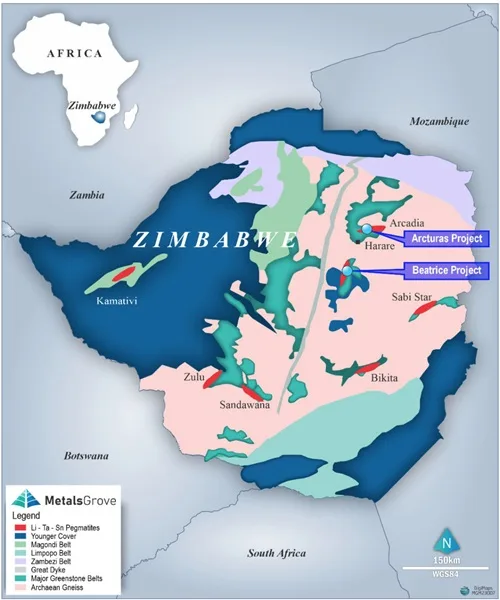
According to the latest statistics, Zimbabwe has emerged as a major supplier of lithium in the world. Actually, Zimbabwe accounts for nearly 10% of lithium imports by China, which dominates the global battery supply chain. However, the Government of Zimbabwe is shifting its policy to encourage more local value addition (#LVA).