
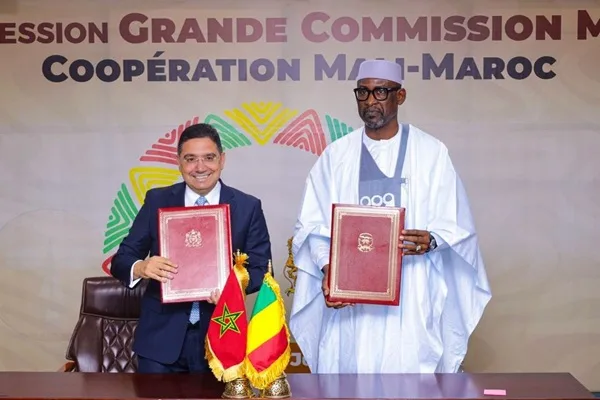
Mali and Morocco Sign Several Accords During 4th Joint Commission
From 21 to 24 July 2026, Mali and Morocco held the 4th Joint Commission in Bamako. This 4th session occurred after a hiatus of 26 years, perhaps signaling the thawing of ties between the two countries.
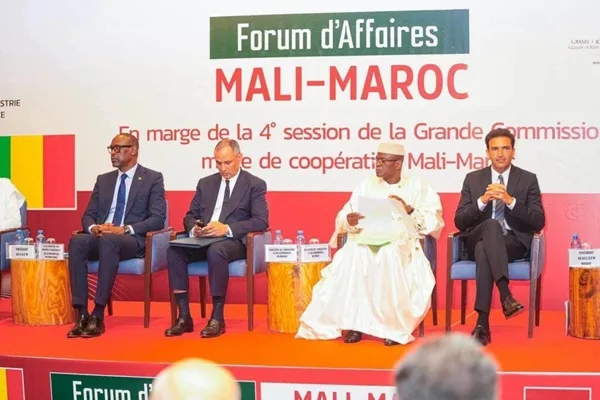
Actually, the high-level meeting was preceded by a preparatory technical meeting from 21 to 22 July 2026. Then, a Mali-Morocco Business Forum took place on 23 July 2026. The activities ended with the Joint Commission co-chaired by the respective Foreign Ministers.
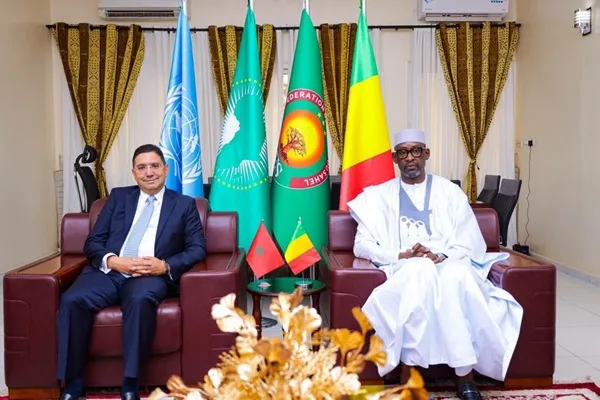
Mali’s side was represented by Minister of Foreign Affairs Abdoulaye Diop, and the Minister of Industry and Trade Moussa Diallo. Similarly, Morocco’s side was represented by Minister of Foreign Affairs Nasser Bourita, and the Minister of Industry and Trade Ryad Mezzour.
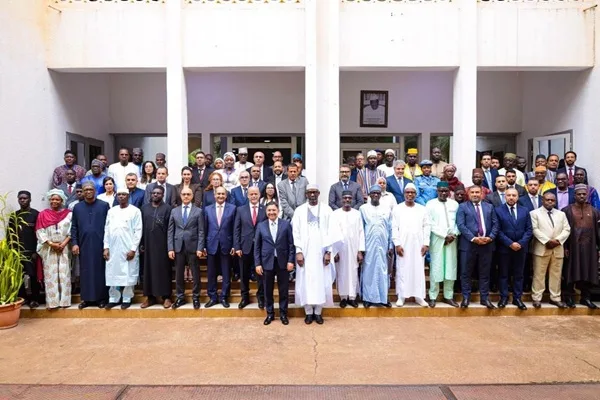
During the Joint Commission, Mali and Morocco signed 21 bilateral agreements covering a range of sectors, including agriculture, education, health, renewable energy, transport, security and water.
Under the Reverse Linkage framework, Morocco’s National Office for Electricity and Potable Water (ONEE) supported PV projects to enhance #ElectricityAccess in rural areas of Mali. In a bid to boost the deployment of renewable energy, the Moroccan Agency for Sustainable Energy has dispatched technical teams to contribute to the #CapacityBuilding for relevant Malian authorities.
Mali will be part of Morocco’s Royal Initiative for Atlantic Ocean Access, providing landlocked Mali with preferential access to Moroccan seaports. Previously, Mali relied mostly on the Port of Dakar in Senegal and the Port of Abidjan in Cote d’Ivoire for most of its international trade, with the Dakar-Bamaka Corridor being the economic artery of Mali.
To foster #FoodSecurity, Morocco agreed to supply fertilizer to Mali to increase food crop yields. Morocco will also provide technical support in the area of sustainable irrigation and table water preservation.
On the matter of Western Sahara, Mali officially reiterated its support for Morocco’s territorial integrity and recognized the Moroccan Autonomy Plan as the ‘single realistic solution to the regional dispute.’
The Business Forum was co-organized by the Chambers of Commerce of both countries. In particular, the General Confederation of Moroccan Enterprises, the Malian Chamber of Commerce and Industry, and the National Council of Employers took the lead. Together, they brought together more than 300 captains of industry and key economic operators from both countries to discuss trade and investment.
Unlike previously, both sides also decided to establish a Permanent Execution and Monitoring Committee managed by both Foreign Ministries. The Committee will be responsible for following up on cooperation projects, while adhering to principles of good governance.