
US and Zambia Finally Finds Common Ground on $2.5B Global Health Cooperation
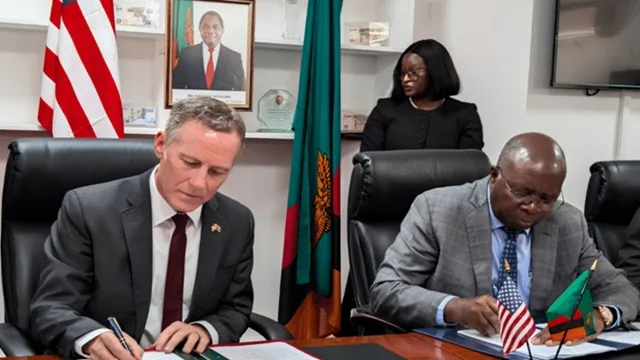
On 8 Oct 2026, the United States of America (USA) and Zambia signed the Global Health Cooperation Memorandum of Understanding (MoU) in Lusaka, Zambia. The MoU falls under the Trump Administration’s #AmericaFirst Global Health Strategy (#GHS), which replaced previous partnership frameworks under USAID and PEPFAR.
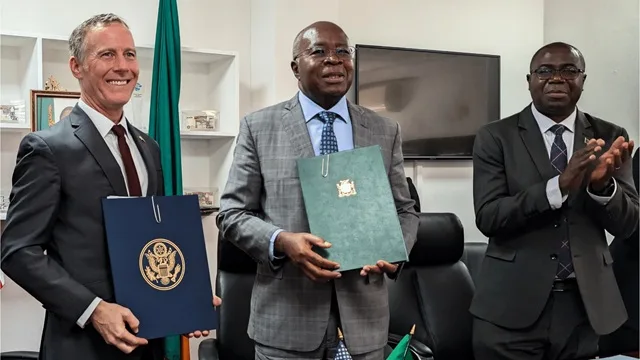
The MoU is for a term of five years and involves a bilateral investment of nearly USD 2.5 billion. The US will contribute USD 1.5 billion, while Zambia will have to come up with nearly USD one billion. US Chargé d’Affaires Mich Coker and Zambia’s Minister of Finance Situmbeko Musokotwane signed the instrument under the watchful eyes of Zambia’s Minister of Health Rama Chilengi.
The main objective of the health partnership is to improve healthcare, in particular for HIV/AIDS, tuberculosis, malaria, maternal/child care and the management of epidemic outbreaks.
The signature comes after almost a year of back-and-forth negotiations. Zambia rejected the initial drafts, citing unacceptable encroachment on its sovereignty. Based on feedback close to the matter, Zambian President Hakainde Hichilema managed to decouple the health deal from #CriticalMinerals. Initially, the US demanded preferential access to copper, cobalt and other minerals in the #Copperbelt and other regions of Zambia. Now, the minerals will be negotiated separately.
“This MoU represents a transformative five-year partnership between the United States and Zambia — one built on shared commitment and mutual accountability. Over the past 25 years, U.S. investments have helped save nearly 1.3 million Zambian lives through HIV treatment services and significantly strengthened Zambia’s health system. Now, with Zambia committing to increase its domestic health expenditures over the next five years, the United States is helping Zambia chart a path toward a strong, self-reliant health system that will serve Zambians for generations to come. In addition to sustaining progress against HIV, TB, and malaria, this MOU is empowering Zambia to take full ownership of its health care and systems while protecting both of our nations from emerging infectious disease threats.”
US Chargé d’Affaires Mich Coker
Another controversial point was the ‘Specimen-Sharing Clause’ which required Zambia to provide biological samples and certain health data to the US. In the new text, the data will be anonymized, while its use will be limited to monitoring and evaluating the effectiveness of US-funded health programs.
So far, Kenya, Tanzania and Uganda have signed similar bilateral health cooperation agreements, while Ghana, Namibia and Zimbabwe have rejected them over data privacy and sovereignty issues. The happy ending to the US-Zambia courtship paves the way for wider acceptance with revised and more acceptable terms.