
EU and China Reach Breakthrough Deal in Bid to Rebalance Trade
Breakthrough Deal
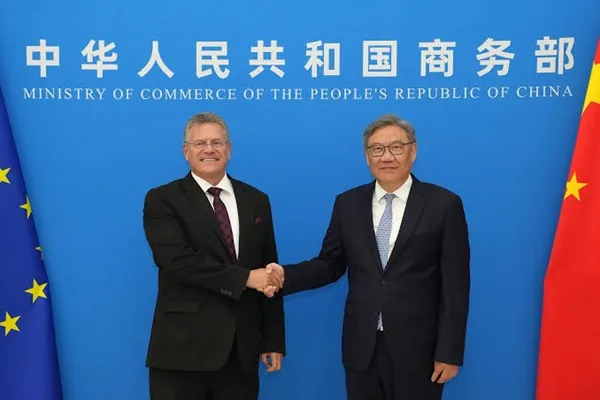
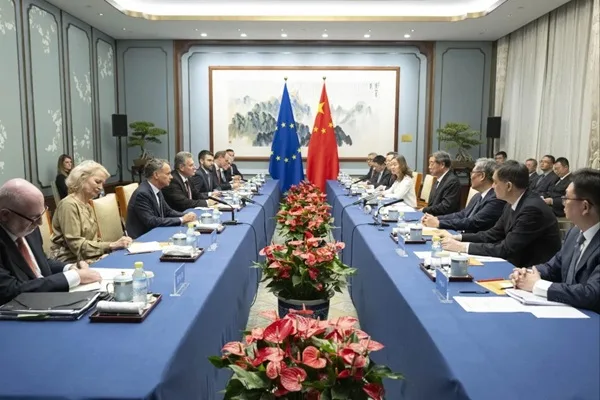
On 9 October 2026, the European Union (EU) and China reached a breakthrough trade deal after intense negotiations in Beijing. EU Trade Commissioner Maros Sefcovic and China’s Minister WANG Wentao issued a joint statement with a 16-point consensus. Late in the evening in Beijing, Commissioner Sefcovic held a press conference to announce the major points of the deal.
The EU has repeatedly voiced concerns about its gaping trade deficit with China. By some estimates, the EU is hemorrhaging about EUR one billion per day to China, and its auto industry risks disappearing. On the other hand, China criticizes the decision of the EU for restricting the export of high-end lithography machines for producing semiconductors, while tightening control over the export of #RareEarths.
Hybrid Vehicles
The centerpiece of the deal concerns hybrid and plug-in hybrids. China agreed to halve its exports to the EU over the next four years, representing several million units.
In 2024, the EU slapped high tariffs on pure Electric Vehicles (#EV) made in China in an attempt to put the brakes on their onslaught. Then, China rapidly pivoted to hybrids and plug-in hybrids to capture over a quarter of the EU hybrid market.
Automakers’ Reaction
In its official press release, the Association des Constructeurs Européens d’Automobiles (ACEA) welcomed the ‘positive step‘. According to the ACEA, Chinese brands have captured 14% of the hybrid electric vehicle (HEV) market and 25% of the plug-in hybrid (PHEV) market in the EU — up from just 2% in 2024. The sudden surge in Chinese vehicles ‘has caused market destabilization and could severely disrupt the broader EU economy’.
The ACEA believes that the regulation of imports is necessary for an ‘orderly transition’ and looks forward to similar measures being extended from passenger cars to buses and trucks. On the other hand, Chinese automakers heaved a sigh of relief for avoiding an outright trade war and market blockade, while protesting against certain protectionist postures.
Price Undertakings
Rather than setting rigid quotas, China managed to wrestle the application of ‘price undertakings’ in conformity with the WTO regulatory framework. In other words, Chinese automakers would set a higher minimum price tag for their vehicles entering the EU market. At the same time, Chinese automakers ‘would accelerate their localization strategy’ within the EU.
Rare Earths
In addition, China has agreed to expedite the licensing process for the export of rare earths and permanent magnets to the EU. It is to be recalled that an earlier export restriction caused car assembly lines to suspend operation in the EU.
Tariffs Reduction
China will lower tariffs on EU goods worth roughly EUR 4 billion. The goods include olive oil, textiles, footwear, and European car parts. The reduction in customs duties is estimated to generate savings of about EUR 225 million.
Ratification and Next Steps
Commissioner Sefcovic underlined that the deal will still have to be examined by the European Council, which could happen next Thursday in Brussels. It is believed that the particulars of enforcing the ‘price undertakings’ will be worked out once the deal is ratified in principle. To follow up, a video conference is scheduled in January 2027, followed by a third round of face-to-face consultations in March 2027.