
India Relaxes Rules for Investments from China
On 10 March 2026, India’s Cabinet approved the relaxation of rules for Foreign Direct Investments (FDI) of adjoining countries. In theory, these rules apply to all bordering countries, such as Pakistan, Nepal, Bhutan, Myanmar, and Bangladesh, but in practice, observers note that China is most likely the main target. In 2020, the Modi Government restricted Chinese investments following the border tussles between India and China.
The policy shift occurs in the context of the US-Iran conflict, which created more uncertainties. India has stepped up efforts to sign up Free Trade Agreements (FTA) with several countries and blocs as it aims to boost its economic development. It thus cannot afford to ignore the second-largest economy in the world to drive its growth.
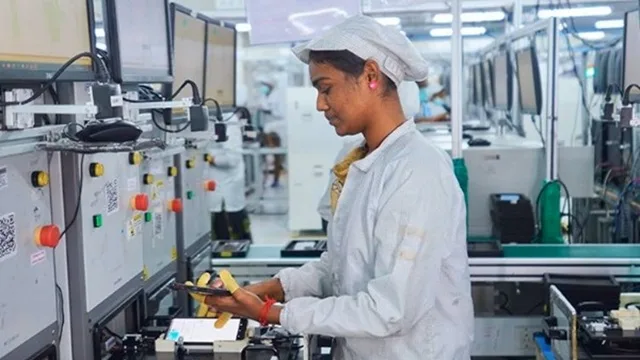
India has identified a number of sectors, including electronics, solar cells and electric vehicles (EV), that will now benefit from an express authorization process as long as certain conditions are met. Thus, India has pledged to process equity participation of Chinese investors in Indian firms within 60 days as long as the Indian side retains the controlling stake. Minority shareholding that does not exceed 10% will no longer require approval from the Union Government.
“Allowing limited Chinese participation in India’s manufacturing ecosystem could make it easier for [multinational] companies to shift final assembly to India while maintaining access to Chinese inputs.”
Teneo Advisor Arpit Chaturvedi
As a case in point, BYD (SZSE: 002594) — China’s largest EV maker — proposed to invest USD one billion in India back in 2023, but the project was blocked based on ‘national security concerns.’ Similarly, the delocalization by FoxConn of Apple’s smartphone manufacturing from China to India was slowed down due to frictions between the two Asian giants. Thus, the Indian industry lobbied the Government to ease restrictions.
The policy shift is aligned with the China-Plus-One strategy of many multinationals that are looking to diversify their supply chains from China. Previously, such attempts were blocked due to India’s restrictive policies.
Other analysts believe that the thaw in India-China relations is to be interpreted as ‘a pragmatic recalibration rather than a structural reset.’ On the other hand, one should not expect a sudden flood of Chinese capital into India. Fundamentally, India and China remain geostrategic competitors.