
Tinubu Secures $1B Financing for Nigerian Ports During State Visit to UK
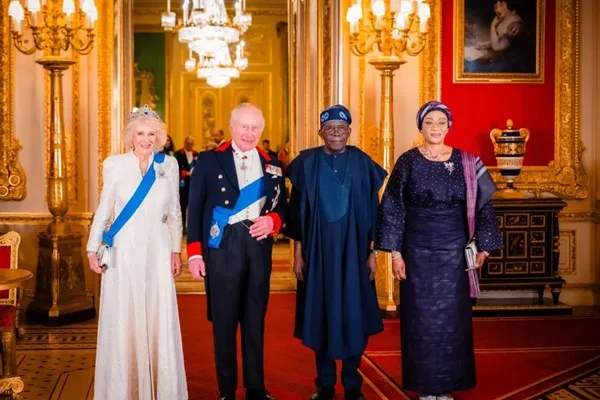
From 18 to 19 March 2026, Nigerian President Bola Tinubu undertook a state visit to the UK. The visit is highly historic and significant as it occurs 37 years after Babangida’s visit in 1989. Also, Tinubu is the 2nd African leader to be received at Windsor Castle, after Liberia’s President Tubman in 1962.
Observers note that the visit represents a ‘diplomatic revival’ between the UK and Nigeria, one of its former colonies and one of the largest countries by population or GDP in Africa. The two countries have a shared dark history marked by the slave trade during colonial times. UK and Nigeria are currently in talks to restitute certain cultural artefacts such as the Benin Bronzes.
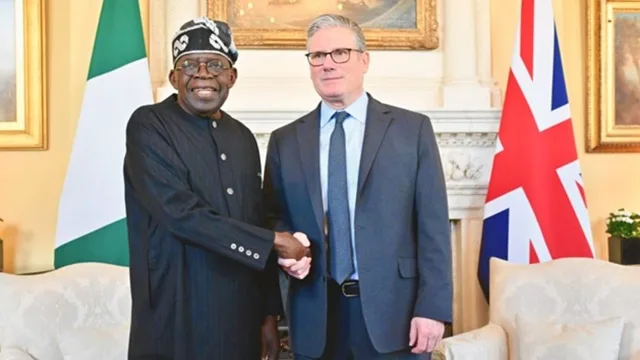
During the two-day visit, President Tinubu also has a tete-a-tete with UK PM Keir Starmer at 10 Downing Street. He also had the opportunity to meet and interact with the Nigerian diaspora and students in the UK.
It is also worth noting that President Tinubu is a muslim and special arrangements were made as the visit occurred during Ramadan. On 20 March 2026, the President returned to Nigeria in time to celebrate Eid-ul-Fitr.
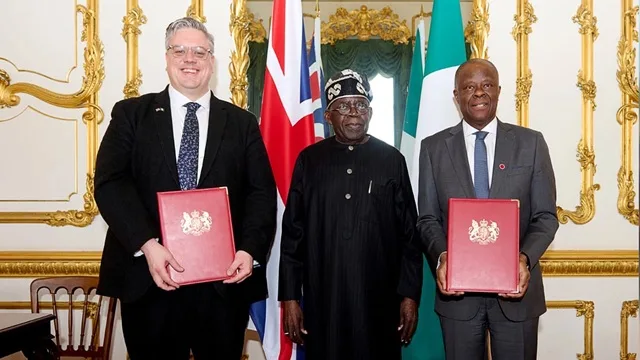
The flagship deal concerns the modernization of two seaports in Lagos: Apapa Quays and Tin Can Island Port. UK Export Finance (UKEF) agreed to extend GBP 746 million ($1B) for this massive infrastructure upgrade. Out of the amount, GBP 236 million is tied to UK supplier contracts, including a GBP 70 million order for British Steel to supply 120,000 tonnes of steel billets.
UK-based Asset Green and the Nigeria Sovereign Investment Authority (NSIA) signed an MoU to launch a large-scale dairy plant. The Project cost is estimated at nearly USD 500 million.
The Nigerian Minister of Defence and his British counterpart also signed a cooperation MoU. The military cooperation includes the supply of military equipment, logistics, training, as well as intelligence sharing.
The University of Lagos and the University of Birmingham will partner to offer joint degree programs in Nigeria, including AI, digital communications, and health. Nigeria’s Zenith Bank is opening a branch in Manchester.
Under the Enhanced Trade and Investment Partnership (ETIP), officials from both countries co-chaired the inaugural ministerial dialogue to advance bilateral economic ties. The talks covered creative industries, financial services, and energy.
UK is home to about 270,000 Nigerians, representing 0,5% of its total population of England and Wales. About 75% of the Nigerian community is in London and Peckham is known as Little Lagos. Other large cities such as Birmingham, Manchester and Liverpool also have sizeable British of Nigerian origin.
The UK and Nigeria also struck an agreement, mostly to stem illegal migration. For the first time, Nigeria will recognize UK letters as identification documents in lieu of passports.
In terms of trade, the UK and Nigeria exchanged goods worth GDP 8.1 billion in 2025, displaying a vigorous 11.4% growth year-on-year. The US enjoys a trade surplus of USD 3.4 billion. The trade is dominated by oil as Nigeria exported GBP one billion of crude oil to the UK, while the UK exported GBP 1,6 billion of refined oil to Nigeria.