
US Aims to Reshore At Least 40% of Semiconductor Manufacturing
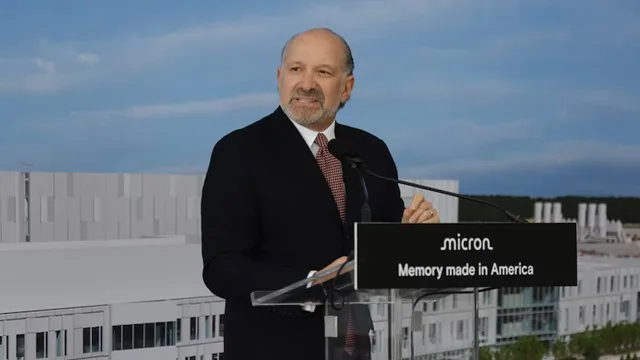
On 23 April 2026, US Commerce Secretary Howard Lutnick held a press gaggle at Capitol Hill to explain the US’ plan for the semiconductor sector. The objective is to reindigenize semiconductor manufacturing within US borders and achieve at least 40% made in America during the term of the current Trump’s Administration.
To that effect, Secretary Lutnick dangled the USD one trillion fund to catalyze the reshoring of chip-making. At the same time, the US will implement high tariffs up to 100% for all imported semiconductors, to force semiconductor fabs to move production to the US. Due to the strategic nature of semiconductors, Lutnick clarified that the semiconductor tariffs fall under a different legislative framework than the broad-based ‘reciprocal #tariffs’.
| Foundry | Trump Admin $B | Biden Admin $B | Change % |
|---|---|---|---|
| Micron | 200 | 75 | 167 |
| TSMC | 165 | 65 | 154 |
| TI | 60 | 30 | 100 |
| Global Foundries | 16 | 13 | 20 |
| Intel | Renegotiated | 8 | – |
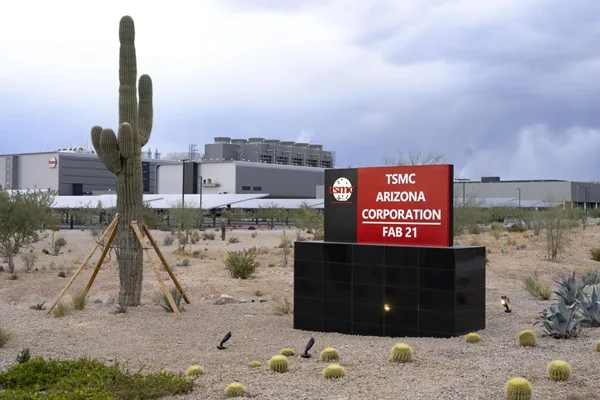
At the center of the revival of the local semiconductor manufacturing lies the Taiwan Semiconductor Manufacturing Company (TSMC), which on its own controls nearly 75% of the global market share and is in the process of rolling out the state-of-the-art 2-nm process. In fact, Nvidia AI chips are produced by TSMC.
Concurrently, Secretary Lutnick has tasked the Bureau of Industry and Security (BIS), operating under his department, to tighten export controls to plug loopholes that could allow advanced chips getting into the hands of strategic rivals such as China and Russia.
During congressional hearings, Lutnick explained the transition of grants into equity stakes for the semiconductor industry. As a case in point, the USD 8 billion grant promised to Intel by the Biden Administration under the #CHIPSAct and Science Act has now been renegotiated into a 10% non-voting equity. Lutnick defended his Department’s budget for FY2027 and asked for sufficient resources to realize his plan.