
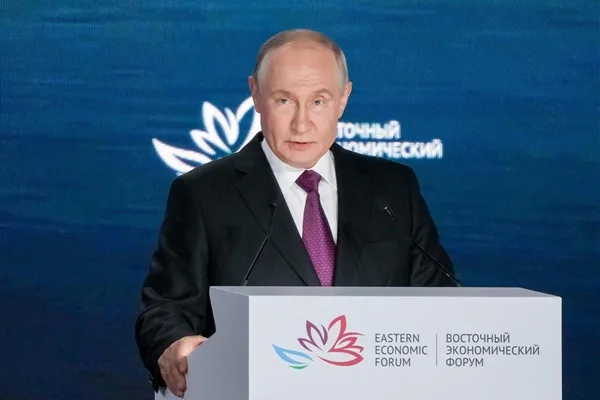
Putin Positions Russian Far East As Petrochemical Hub and Gateway to Asia-Pacific at EEF 2026
From 1 to 4 September 2026, Russia held the 11th Eastern Economic Forum (EFF) in Vladivostok on the campus of the Far Eastern Federal University. The theme for this 11th edition was ‘The Far East: Development for the Benefit of People.’ 385 projects worth USD 7.7 billion were sealed during the Forum, reinforcing its position as the premier economic forum for the Asia-Pacific.
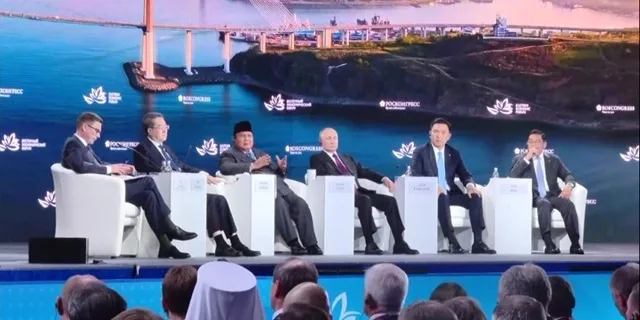
Over 7,000 delegates from more than 70 countries and regions attended the Forum. Russia’s President Vladimir Putin welcomed Indonesia’s President Prabowo Subianto, Mongolia’s Prime Minister Nyam-Osoryn Uchral, Chinese Vice Premier DING Xuexiang, and Myanmar Vice President U Nyo Saw.
Facing persistent uncertainty in the Middle East, Russia is promoting the Trans-Arctic Transport Corridor, which China refers to as the Polar Silk Route. With the use of year-long icebreakers, Russia aims to boost the trade traffic to at least 5 million TEU by 2030.
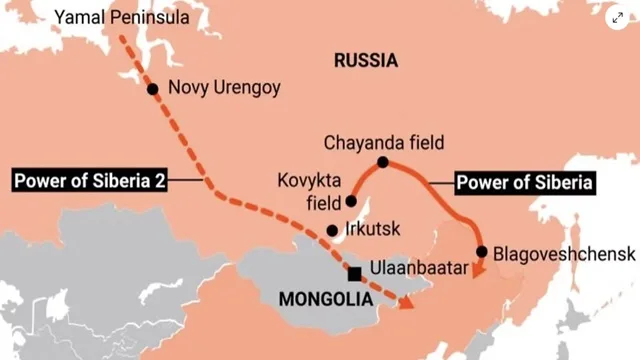
Russia is also pushed the Power of Siberia-2 gas pipeline, with the export component called Power of Baikal having a capacity of 50 billion cubic meters annually. Concomitantly, Russia is upgrading its Far East gas infrastructure network.
In his opening remarks, Putin positioned Vladivostok as the gateway to the Far East and the bridgehead to the Asia-Pacific. Certain resource-rich Far East and Arctic regions will be upgraded from Territoriya Operezhayushchego Razvitiya (TOR) to Super-TOR, which can be viewed as a Special Economic Zone enjoying special fiscal regime and strong state support.
Russia and China expects to multiply their bilateral trade by 2.5 times to exceed RUB 1.7 trillion ($20B). Far Eastern Technologies plan to upgrade several Russia-China border posts in the Primorye region. The Kuldur thermal water resort will also be modernized thanks to investment by Xinyang Zhengtong.
The Eurasian Economic Union is finalizing a Free Trade Agreement with Indonesia, acting as Russia’s springboard in to ASEAN. Indonesia’s President Prabowo proposed joining forces of the two countries Sovereign Wealth Funds, namely, Danatara and RDIF, to finance joint infrastructure and manufacturing projects. Indonesia is particularly interested to have Russia’s support to develop its oil and civil nuclear sector.
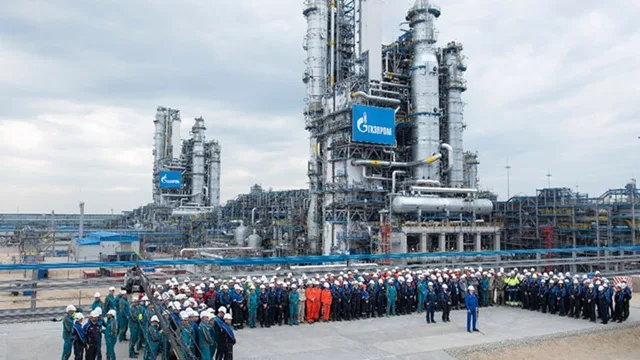
The largest project is the Interregional Petrochemical Cluster and is estimated to cost RUB 100 billion ($1.2B). The cluster will link up the three administrative territories of Khabarovsk Jrai, Primorsky Krai, and Amur Oblast. The Russia central goverment plans to promote local beneficiation of the hydrocarbons and minerals available in those regions. In particular, the cluster will be anchored by the already-operational Amur Gas Chemical Complex and aims to produce produce high-value chemicals, synthetic ploymers and specialized plastics.