

Mauritius DPM Berenger Reignites Regional Cooperation and Integration Council
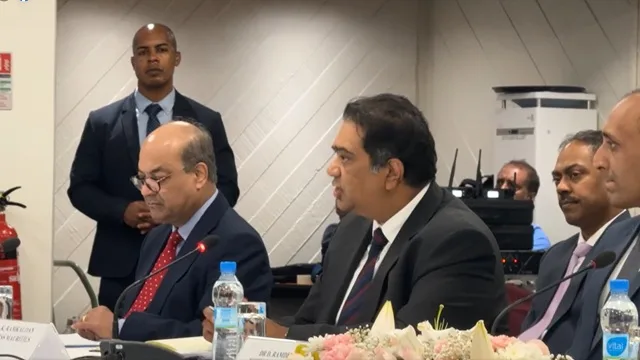
On 23 September 2025, Mauritian Deputy Prime Minister (DPM) Paul Berenger officially relaunched the Regional Cooperation and Integration Council (RCIC) in light of the emergence of Africa. It is believed that the Council will reinvigorate the #AfricaStrategy of Mauritius in order to take advantage of opportunities in its hinterland.
Setting the tone for the meeting, DPM Berenger started off by highlighting that the #AfCFTA presents a huge single market of more than one billion consumers, of which Mauritius is a part and parcel of. In his mind, he envisions a set of concentric circles to take the initiative forward. Firstly, Mauritius will focus on neighboring island-states such as Madagascar, Reunion, and Comoros. Then, Mauritius will look at the sub-region of southeastern Africa, which includes key countries such as South Africa, Kenya and Mozambique, before going further afield.
In order for regional integration to materialize, it is believed that an upgrade of the sea and air #connectivity will constitute a crucial step. In the past, Mauritius proposed a Freight Rebate Scheme and a regional maritime freight service to boost regional trade. During the recent state visit of PM Ramgoolam to India, the two sides signed an agreement to upgrade the container terminal of Port Louis. The project of aviation connectivity failed to take off as the Government of Mauritius chose to favor Air Mauritius, although Ethiopian Airlines and Qatar Airlines have expressed interest in partnering in that direction.
In the past, Mauritius has had a mixed record in Africa, with successes and failures. At one point, Mauritius tried to replicate its ‘economic miracle’ via textiles with the joint creation of Special Economic Zones (#SEZ) in several countries, including Côte d’Ivoire, Ghana, and Senegal. However, the program met with mitigated results, with the notable exception of Madagascar being propped up as one of the textile powerhouses in Africa. Similarly, the relocation of sugar mills was a success in Tanzania, but not so much in Mozambique or Côte d’Ivoire.
Business Mauritius CEO Kevin Ramkaloan highlighted that the private sector has a keen interest in projects in the fields of the #CircularEconomy and #EnergyTransition, with a regional scope. As a matter of fact, the waste-to-wealth projects will require regional cooperation in order to achieve the necessary critical mass. Similarly, Mauritius has started looking in its neighborhood for its energy security and a cleaner energy mix.
The huge #EEZ of Mauritius and the geostrategic location of Mauritius are far from being fully exploited. With the ratification of the restitution of sovereignty over Chagos underway, Mauritius will command an EEZ of approximately 2.3 million square kilometers, placing it inside the top 20 largest oceanic states in the world. As such, the #BlueEconomy is perhaps a sector that presents a significant growth driver in the future.