
EU-India FTA Hailed as ‘Mother Of All Deals’
On 27 January 2026, India and the EU signed a Free Trade Agreement (FTA) after more than two decades of talks. Observers note that the signature occurs in a particular context, namely when the US raised #tariffs on both the EU and India, prompting them to diversify their trade partners.
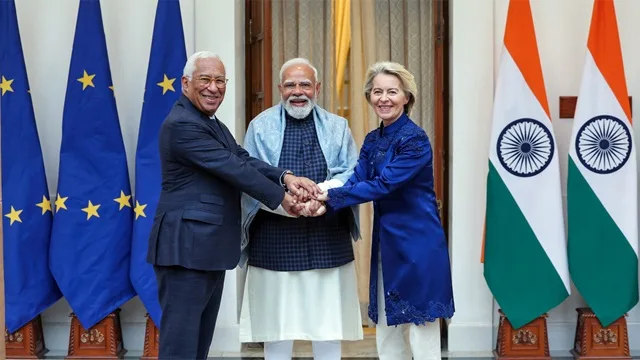
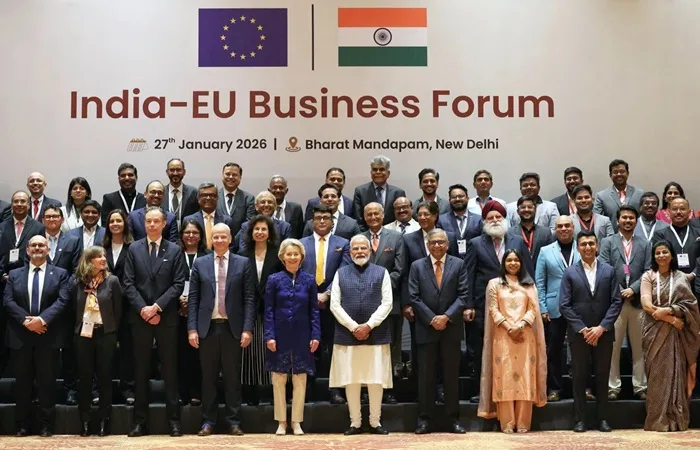
EU President Ursula von der Leyen and EC President Antonio da Costa traveled to Delhi for the historic deal. As an anecdote, Antonio da Costa proudly presented his Overseas Citizen of India (OCI) card, as he can trace his ancestry to Goa. The visit was scheduled to coincide with India’s Republic Day, which falls on the 26th of January every year. The EU Delegation also attended an India-EU Business Forum to deepen economic ties.
Analysts are calling the FTA between the world’s most populous country and twenty-seven of the most advanced global economies ‘the mother of all deals’. Together, the EU and India account for 25% of the world’s #GDP and nearly 30% of the world’s population. Currently, some 6,000 EU companies are operating in India, and the EU’s cumulative #FDI into India has reached nearly USD 120 billion since 2000.
The #FTA will reduce tariffs on about 95% of all tariff lines in both directions. The EU maintains tariffs on agricultural products. On the other hand, Indian labor-intensive sectors such as textile and apparel, leather and footwear, gems and jewellery, handicrafts and furniture, as well as aquatic products, will enjoy the same treatment as Bangladesh, Vietnam, and Turkey.
Interestingly, India will slash tariffs on European wine and olive oil. In addition, the EU will reduce tariffs on Indian pharmaceuticals while India will provide a rate-quota for 250,000 European cars, slashing tariffs from 110% to 10% gradually over a number of years.
On the human resources front, both the EU and India agreed to loosen work and study visas. The EU will set up a European Legal Gateway Office in India to streamline applications. Mainly targeted at Indian IT professionals, the measures will also allow Ayurvedic doctors to practise in Europe.
Before the FTA goes into effect, both sides will need to ratify it based on their own procedures, and that could take up to the end of 2026. In addition, many of the tariffs will be phased out gradually, as both sides wish to proceed with caution.
Over the past three years, the bilateral trade volume oscillated around USD 136 billion, with India enjoying a surplus of around USD 25 billion. With the advent of the FTA, analysts believe it could boost trade volume to USD 200 billion by 2030.