
Tanzania Turns On Julius Nyerere Hydropower Plant to Become Green Electricity Exporter
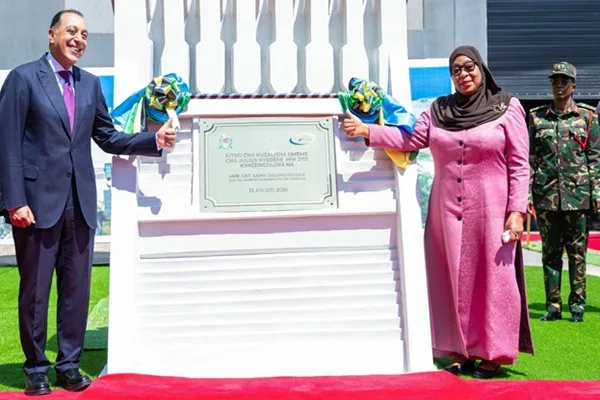
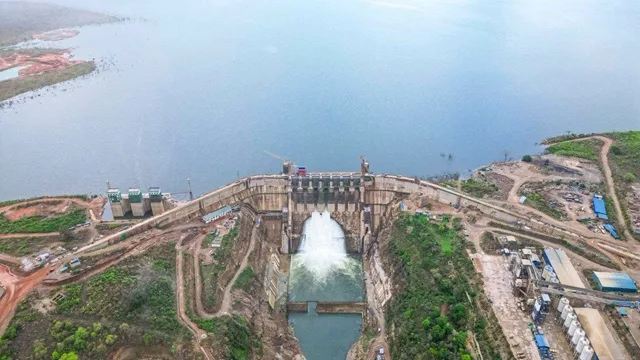
On 22 August 2026, Tanzania’s President Samia Hassan officially inaugurated the Julius Nyerere Hydropower Plant (JNHPP) in the presence of Egypt’s Prime Minister Mostafa Madbouly. The Plant has a generation capacity of 2,115 MW and its construction cost USD 2.84 billion. JNHPP now accounts for nearly 45% of the national generation capacity of Tanzania, and it is all green energy.
Annually, JNHPP can produce around 6 TWh of renewable energy, which is sufficient to provide #ElectricityAccess to 60 million people and contribute to the industrialization drive. This is equivalent to avoiding about 3 million tonnes of carbon dioxide (tCO2). Tanzania has also established a National Carbon Framework to unlock climate finance.
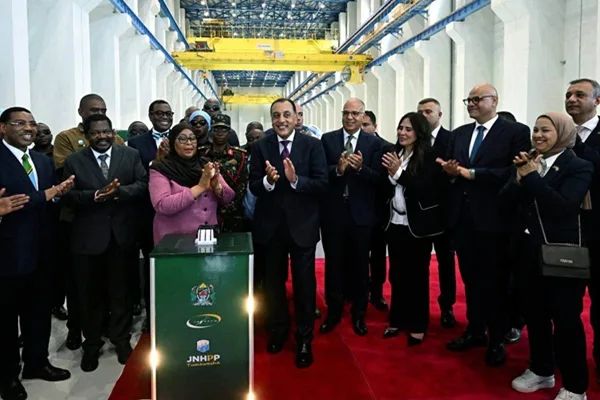
The Government of Tanzania financed the dam from its own funds and Egypt’s Arab Contractors acted as the Engineering, Procurement and Construction (EPC) company. Elsewedy Electric provided the turbines and electrical equipment. Tanzania Electric Supply Company (TANESCO) owns and operates the asset.
The operationalization of JNHPP brings the national capacity of Tanzania to 4,646 MW, while its peak demand is only 2,271 MW. That leaves Tanzania with a massive surplus and the Government of Tanzania is in talks with its neighbors, Kenya and Zambia, to export its electricity.
Kenya and Tanzania are part of the East Africa Power Pool (EAPP) and have an agreement in place to allow electricity to flow automatically based on real-time demand and supply. But for Zambia, large-scale cross-border electricity flow is currently constrained by the capacity of the transmission lines.
Thus, a new 400 kV Tanzania-Zambia Interconnector is being built, linking Tunduma in Tanzania to Nakonde in Zambia, with completion targeted in 2027. Zambia is also part of the Southern Africa Power Pool (SAPP), and can act as the interface between SAPP and EAPP.