

Endelevu Signs $3B Integrated eMobility Project in Kenya
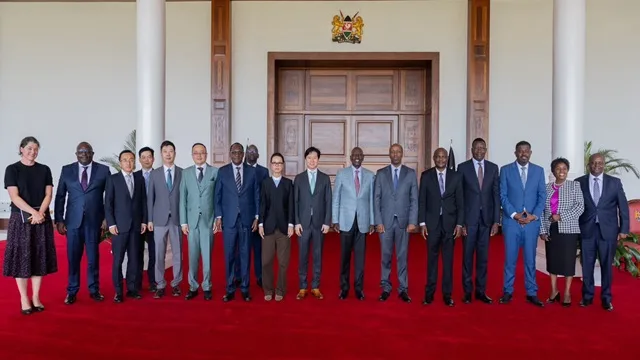
On 6 October 2026, Endelevu Enterprise Corporation inked a landmark Memorandum of Understanding with the Government of Kenya for an integrated #eMobility project estimated at around USD 3 billion. Susong Tong, Chairman of Endelevu, and Lee Kinyanjui, Cabinet Secretary at the Ministry of Investments, Trade and Industry penned their signatures to the agreement.
The signature ceremony took place at the State House in Nairobi and was witnessed by President William Ruto. Cabinet Secretary of the National Treasury, John Mbadi, and Cabinet Secretary of the Ministry of Roads and Transport were also in attendance.
The Project is anchored on a vehicle assembly plant, with an annual capacity for 50,000 four-wheelers and 100,000 two-wheelers. In addition, Endelevu will deploy 1,000 solar charging stations across the country. To top it off, a centralized digital fleet management platform will track and manage the vehicles.
According to Endelevu, the Project will create 2,000 direct jobs and more than 20,000 indirect jobs for logistic operators and other service providers. Endelevu is partnering with China’s automotive giant Geely on this Project. President Ruto was happy to note that the Project is aligned with his Kenya’s National eMobility Policy, spearheaded by the Ministry of Roads and Transport.
The main thrust of the Policy is the greening of the transport sector in Kenya by leveraging its natural renewable sources such as geothermal, hydro, solar and wind. Initially, the focus will be on the matutu (minibus) and ubiquitous bodaboda (motorcycle) fleet. To bolster industrialization, EV assembly parts and components are exempted from customs duties and VAT.

Kenya has removed excise duty and VAT on EV and lithium batteries but banned the importation of used EV batteries to protect consumers. Furthermore, the building code now mandates new commercial and multi-unit dwelling to allocate at least 5% of their parking spaces for EV. Certain roads will have priority lanes for green vehicles, easily identified by a reflective green number plate. Since 26 September 2026,
Kenya’s Energy and Petroleum Regulatory Authority (EPRA) scrapped the 15,000 kWh montly consumption cap for eMobility tariff. However, EV owners must remember that they can enjoy the lowest rates by charging during off-peak hours at night.