
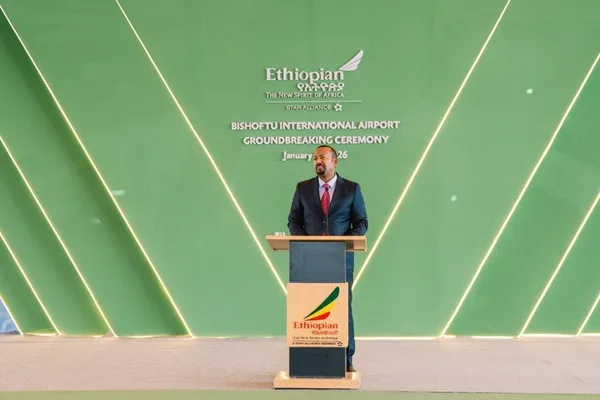
Ethiopia Performs Groundbreaking Ceremony at New $13B Bishoftu Airport Project
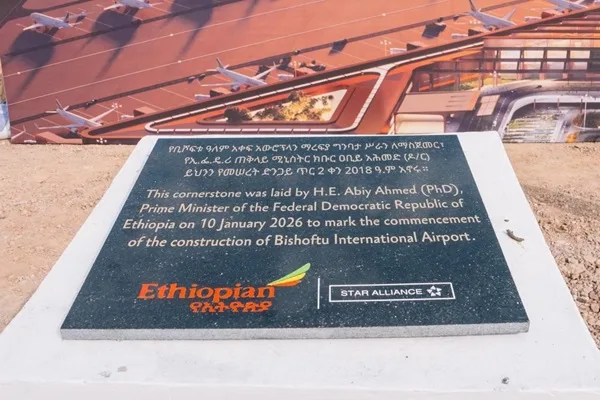
On 10 January 2026, Ethiopian PM Abiy Ahmed carried out the groundbreaking ceremony for the construction of the new #Bishoftu Airport. The Project is estimated to cost nearly USD 13 billion, and the first phase is expected to be ready in 2030. In his speech, he underscored that the new Bishoftu airport will be the largest in Africa.
The Project is mostly financed by the national carrier, Ethiopian Airlines, which also holds the title of the largest airline in Africa. The design capacity is for 110 million passenger-trips a year, compared to the 25 million at the existing Bole airport.
The African Development Bank (AfDB) is the lead arranger for the financing and has itself contributed USD 500 million of its own funds to the Project. The bank and the Government of Ethiopia have also approached other investors and lenders from Europe, China, the USA, and the Middle East.
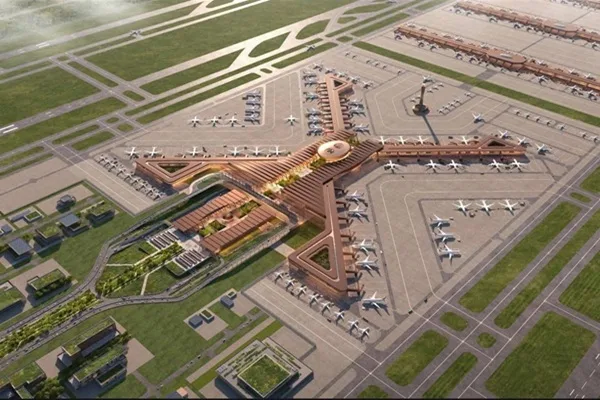
As part of the project, Ethiopia is also building a multi-lane highway to link the city center of the capital, Addis Ababa, which is some 40 kilometers away from the airport. Additionally, the airport will be served by a high-speed rail running at 200 kilometers per hour, which will connect to the old Bole airport.
Land acquisition is underway to clear some 35 square kilometers for the airport site. Some 2,500 landowners, mostly smallholder farmers, will be compensated to make way for the project. The relocation costs are estimated to be about USD 350 million.
Ethiopia is the 2nd most populous country in Africa, with a population of 130 million, behind Nigeria’s 200 million. The strategy of Ethiopian Airlines is to develop Addis Ababa into one of the top aviation hubs in Africa and to serve as many destinations as possible across Africa and around the world.
Dar Al-Handasah Consultants performed the master planning, while Zaha Hadid Architects undertook the design. Sidara Group was responsible for the engineering such as the runway, control tower, and technical aspects.