

BCEAO Extends Deadline to 30 September 2026 for Banks to Connect to Regional Payment Gateway
On 25 June 2026, the Central Bank of the West African Economic and Monetary Union (WAEMU) issued a communiqué indicating that the deadline for connecting to the Regional Payment Gateway has been set for 30 September 2026. The WAEMU consists of eight countries, namely, Benin, Burkina Faso, Guinea-Bissau, Cote d’Ivoire, Mali, Niger, Senegal and Togo.
The Central Bank of the West African States (BCEAO) is spearheading the initiative and the project’s acronym is PI-SPI, which translates into Interoperable Instant Payment System Platform (IIPSP). The service allows for secure cross-border transfer instantly and is available 24/7, even when banks are closed. The Platform takes into account the latest technological developments and real needs such as mobile wallets, #fintech accounts and microfinancing.
Strategically, the deployment of IIPSP would also boost financial inclusion and foster regional economic integration by reducing transaction costs and friction. The WAMU roadmap aligns with the wider ECOWAS and continental efforts to bolster the Pan-African Payment and Settlement System (PAPSS). At the same time, Central Banks in the region are considering the digital currency, known as eCFA.
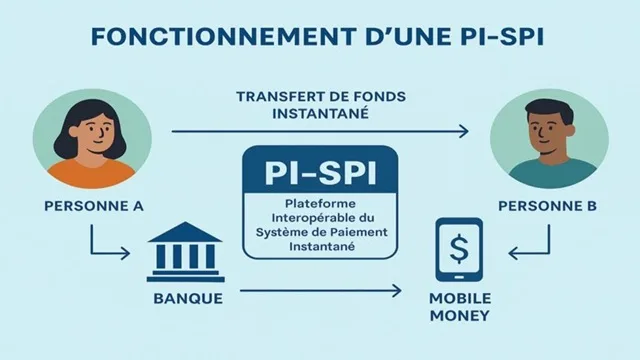
Technically, WAMU has adopted the ISO 20022 for Financial Messaging Standard. based on XML syntax. From a compliance perspective, banks in the region are migrating card and other digital transactions to the NEXO standards. To ensure interoperability, the region will gradually phase out closed, proprietary legacy systems and introduce the centralized gateway, which can be accessed via an Open RESTFul API.
To make the system more user-friendly, the Platform provides a Unified Account Aliasing Framework. This aliasing maps long and complex bank account numbers into shorter and simpler aliases such as mobile phone numbers, ensuring a unique unified identity across various interfaces.
Live testing has already been carried out successfully to validate the regional Platform. Participating institutions are required to undertake compliance and upgrade their cybersecurity measures in preparation for the regional deployment. As at 24 June 2026, BCEAO reported that 80 financial institutions have already linked up to the PI-SPI Platform.