
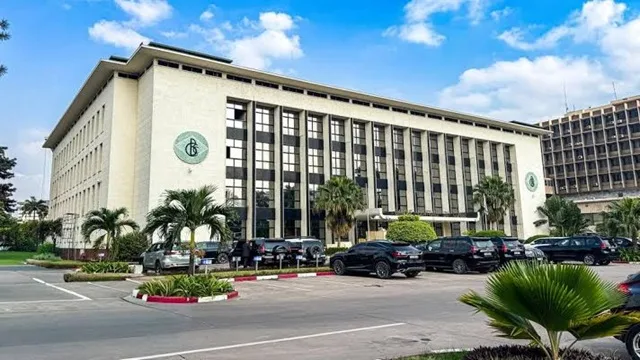
Republic of Congo Issues Eurobonds for $700M
On 11 February 2026, the Republic of the Congo (Brazzaville) announced that it had successfully carried out an #Eurobond issue, totaling USD 700 million, at the London Stock Exchange. The coupon rate was set at 9.5%, but the actual yield is 11.625%.
The tenor is for ten years with maturity in January 2035. Repayment is deferred until January 2031 with annual instalments for five years to clear the debt. Congo-Brazzaville is counting on its oil revenues to repay its sovereign debt.
The high interest rate is explained by the low sovereign rating of the country. Both S&P Global Ratings and Fitch Ratings maintain a CCC+ rating for Congo-Brazzaville. Citigroup acted as the sole bookrunner for the deal, while Rothschild provided advisory services, and Cleary Gottlieb Steen & Hamilton represented Congo-Brazzaville legally.

Appetite for financing Congo-Brazzaville was quite strong as the order book was oversubscribed, with bookings reaching USD 2 billion, from more than 1000 international investors and financiers. Some analysts believe that this shows that investors are comfortable with the high-risk, high-return profile of the deal.
The government of Congo-Brazaville plans to use the funds to refinance domestic debt, maturing in March 2026, and to buy back Eurobonds issued earlier, which will arrive at maturity in 2032.
In a similar move, the Government of the Democratic Republic of Congo also plans to issue Eurobonds to the tune of USD 750 million in April 2026. In contrast to the Republic of Congo, the Democratic Republic of Congo is applying the financing mostly for infrastructure development, including the expansion of N’djili International Airport, the construction of roads and power plants, with a particular emphasis on improving rural #ElectricityAccess.
In the case of DRC, Citigroup partnered with local bank Rawbank to act as the underwriter and deal arranger. Rothschild provided financial advisory services, while White & Case LLP was the legal advisor.
Back in 2008, DRC signed the so-called deal of the century with China, which involved a minerals-for-infrastructure swap valued at nearly USD 10 billion. However, DRC later renegotiated the terms of the deal as the level of infrastructure delivered was well below expectations. With its first-ever Eurobond issue, the DRC plans to expand its financing options.
Just in January 2025, S&P Ratings upgraded the sovereign rating of DRC from ‘stable’ to ‘positive (B-)’, making access to capital cheaper. The Debt-to-GDP ratio of DRC is relatively low at less than 14%, and the country assessment by the IMF is also positive. Certain analysts believe the interest rate on the loan may be on the high side.
The financing via Eurobonds takes place in a context of sustained global demand for copper and cobalt, of which the DRC has plenty. The eastern region bordering Rwanda remains unstable, although efforts by the US to stabilize the situation are underway. Thus, the main risks are an escalating conflict and a drop in the prices of these #CriticalMinerals.