
DR Congo Launches Gold Refinery In Bid to Claw Back Benefits Locally
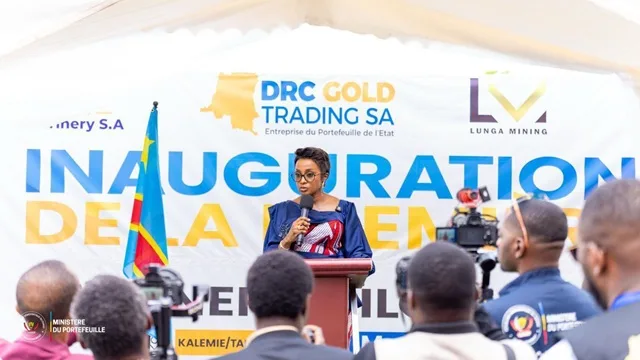
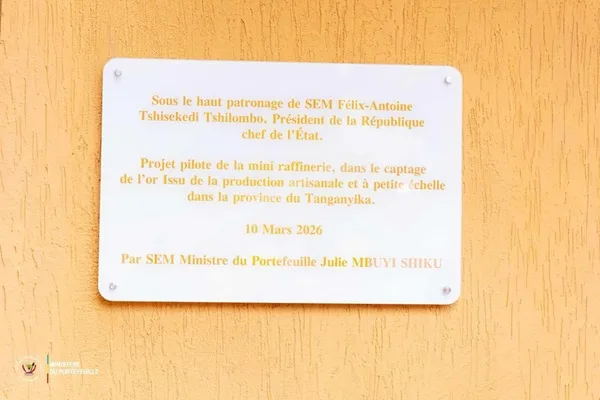
On 11 March 2026, the Democratic Republic of Congo (DRC) inaugurated its first #gold refinery in Kalemie, on the shore of Lake Tanganyika. The refinery is strategically located near the known gold-mining regions of Tanganyika, Maniema and South Kivu. The Minister of Mines, Julie Shiku, several ministers, and other high-level officials attended the ceremony, given the project’s significance within the national policy to capture more value locally and to structure the artisanal mining sector.
The project is a public-private partnership (#PPP) via a joint venture (JV) between the state-owned enterprise DRC Gold Trading and the private company Lunga Mining. DRC Gold Trading is a government trading house that was created as part of the reforms in the gold sector. The refinery and gold trading house are part of the broader rationalization of the gold sector in DRC.
Previously, most of the gold mined in DRC was exported illegally through its porous borders to neighboring countries. Remarkably, Uganda has emerged as a large gold exporter, thanks in part to its gold refinery. In 2025, Uganda officially reported exporting 40 tonnes of gold, while producing almost none domestically. Most of the gold from East Africa eventually finds its way to global trading hubs like Dubai or Hong Kong.
In 2023, the DRC Government attempted to launch the Congo Gold Refinery in Bukavu, but the Ministry of Mines revoked its license before the project could start operations. Furthermore, Eastern DRC is riddled with armed conflicts and controlled by rebel groups that extract most of their revenues from mining, and the DRC Government has had difficulty bringing the border region under control. Perhaps with international assistance, the Government hopes to bring peace and stability to that region.
For these reasons, the Kalemie Gold Refinery will kickstart modestly with an initial pilot phase. It can process 600 kilograms of gold per month and plans to produce up to 7 tonnes of gold bullion at 99.9% purity annually. It will certainly curb smuggling, but it will probably not put a stop to it.
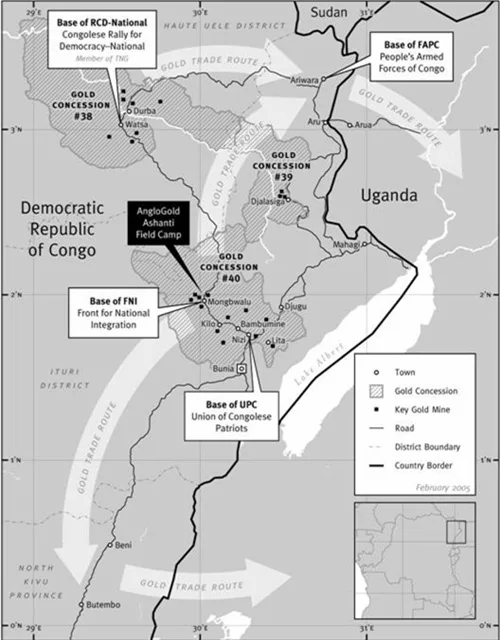
(Source: Human Rights Watch)
At the same time, the Government is upgrading the logistics infrastructure linking up Eastern DRC to Burundi, Tanzania, Uganda and Zambia. The refinery sits right on the shore of Lake Tanganyika and has access to multimodal transport by water and land.
In addition, the Manono #lithium deposits — considered one of the largest in the world — will benefit from the upgraded infrastructure, which will greatly facilitate transport. Thus, the DRC Government is killing two birds with one stone. The move on gold by DRC is aligned with the wind of change blowing across Africa that is now woke to extracting more benefits from its mineral wealth.
It is estimated that the DRC produces nearly 40 tonnes of gold annually, with 25 tonnes coming from industrial mining and 15 tonnes from artisanal mining. Officially, the DRC records less than one tonne of gold exported, but some people close to the matter estimate the real amount of gold smuggled illegally is closer to 12 tonnes, as most of the output from artisanal mines goes under the radar.