
Tanzania to Become Global Player in Niobium Thanks to Panda Hill Project
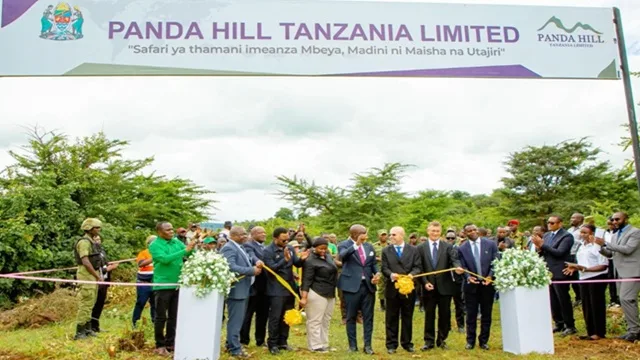
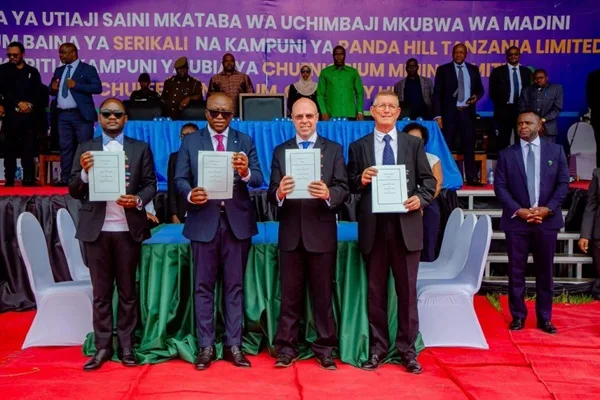
On 24 March 2026, Panda Hill Tanzania (PHT) Limited signed an agreement with the Government of Tanzania to develop the Panda Hill Niobium Project. From the start, the Project involves local value addition with the construction of a ferroniobium smelter. The Project has the potential to propel Tanzania as the 4th-largest #niobium producer in the world.
According to the Agreement and under a Special Mining Licence, the Government will hold 16% non-dilutable shareholding in the Project. The Agreement also makes provision for local content, with an estimated USD 1.8 billion to be spent on local goods and services over the lifetime of the project, with a target of at least 70% local participation. Also, as part of the #ESG commitments, PHT has earmarked TZS 20 billion to modernize the Songwe Prison, since the mine is located on land belonging to the prison farm.
Currently, Brazil is the undisputed global leader in niobium production, with a 80% market share. Then comes Canada, which produces about 10%. The Panda Hill Project is projected to produce 100,000 annually, representing 4% of the global market. The Project is the first such like in Africa and is only the fourth such facility to be built in the world in the last 40 years.
Niobium is a Rare Earth Element (#REE) that is critical for high-performance alloys with applications in automotive, aerospace, high-rise construction, energy and defense industries. Nearly 90% of niobium is used as ferroniobium to strengthen steel. Used in anodes, it allows for fast-charging of the batteries of Electric Vehicles. Niobium is biocompatible and is thus widely used in medical implants such as bone plates, dental, skull screws, stents, and pacemakers. Niobium is used for superconducting magnets in MRI and particle accelerators.
In terms of connectivity, Panda Hill is ideally situated just 2 kilometers from the Tanzania-Zambia Rail (#TAZARA) line, 5 kilometers from the Dar es Salaam – Tunduma Highway, and 8 kilometers from the Songwe Airport. The nearest urban agglomeration is Mbeya City, some 26 kilometers from the mine.
The Project is backed by private equity manager Denhan Capital, and the level of foreign direct investment (FDI is estimated to reach USD 300 million. During construction, the Project will employ 1,600 persons, and upon completion, it will require some 600 persons to run.
PHT CEO Dennis Cook did not give a definite timeline for implementation as the studies have to be updated and the Special Mining License is yet to be issued. At Phase One, the Project is expected to output 1.3 million tonnes per annum (mtpa), and the volume is projected to ramp up to 2.6 mtpa within five years from the start of operation.