
China’s Zero-Tariff Policy for Africa Might Have Limited Impact
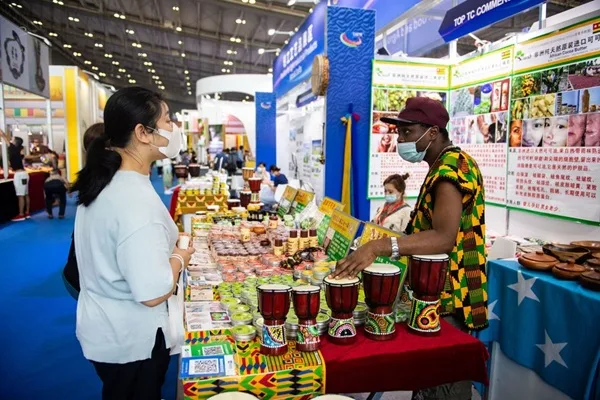
Announced with great fanfare at the China-Africa Economic and Trade Expo 2025 (#CAETE2025) in Changsha in June 2025, the zero-tariff policy for Africa is in effect as of the 1st of May 2026. All African countries with diplomatic ties with China are eligible; that concerns about 53 countries out of a total of 55, making up the African Union. The two exceptions are Eswatini, which prefers to maintain diplomatic relations with Taiwan, while Western Sahara is not yet recognized by the United Nations, and China.
In theory, this sounds like great news, but in reality, the effect might be limited. Already, thirty-three African countries qualify for such treatment since the 1st of November 2024 under the same policy targeted at Least Developed Countries (#LDC). Looking at the trade data, Africa exports mostly crude oil and raw minerals to China. Most African countries do not have sufficient industrial capacity to meet their own local demand, much less produce for export.
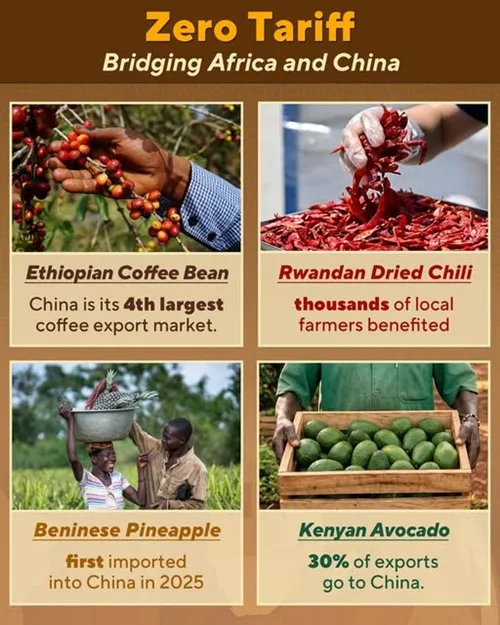
As far as agricultural produce is concerned, much has been written, but in fact, the figures are quite modest. Removing customs tariffs is often not sufficient, as China still puts up substantial non-tariff barriers (#NTB), such as strict sanitary and phytosanitary protocols (#SPS) and esoteric national standards. The successful cases of Ethiopian coffee bean, Ghanaian cocoa, Rwandan dried chili, and Kenyan avocado are still far and few between.
South Africa is one of the top fruit producers in Africa, but China has yet to welcome it with full open arms. When South Africa tried to export its citrus fruits to China, it faced one of the world’s strictest phytosanitary regimes, which the Chinese authorities justified as being necessary to prevent the introduction of pests such as the False Codling Moth. Then, China demanded extremely high standards to ensure the integrity of the logistical cold chain, making it exceedingly costly to implement. Typically, the negotiation for a single fruit can take at least five years, whilst this zero-tariff policy is said to be limited to just two years.
As for manufactured goods, it is hard to see how African countries might be in a position to export to China. China is known as the World’s Factory and produces almost everything under the sun at a scale and cost that cannot be matched by other countries.
Taking apparel as a case in point. China has been selling low-cost and even second-hand clothes to Africa, which are cheaper than those sewn up locally. At the same time, Chinese apparel giant Shein has been pushing direct sales online at highly discounted prices. It is hard to see African textile manufacturers exporting their garments to China in any significant volume.
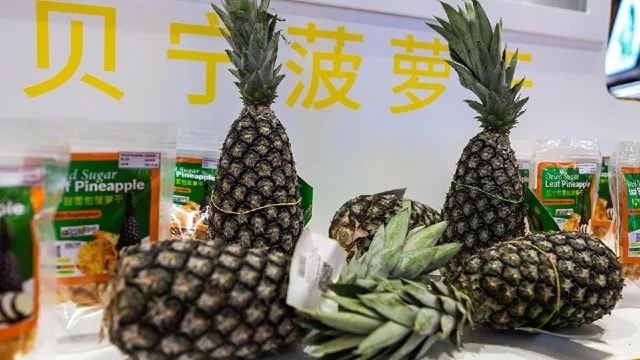
Another interesting case is Mauritius. Back in 2021, when the China-Mauritius Free Trade Agreement (#FTA) became effective, it was touted as a major breakthrough and even perhaps as a model for other African countries to follow. However, the trade figures tell quite a different story. Exports from Mauritius to China actually dropped from USD 32 million in 2021 to just USD 20 million in 2025. Mauritius is yet another cautionary tale to look clearly at the data, rather than just listen to diplomatic rhetoric.
At the same time, China is promoting its China-Africa Economic Partnership Agreement for Shared Development (CADEPA). Under #CADEPA, China is focusing on what it calls Early Harvests, which is basically importing more agricultural products from Africa by removing non-tariff barriers (NTB). Again, it can be argued that agricultural produce essentially has low value added and will unlikely redress the balance of trade.
If the zero-tariff policy does not translate into long-term supply contracts, it is unlikely to have any effect on the industrialization of Africa and the balance of trade. Only long-term contracts would give investors the visibility and confidence to invest in upgrading production capacity. Local authorities must also ensure that #LocalContent criteria are satisfied to ensure the benefits are enjoyed mostly locally.
Observers note that the move by China is no more than a show to score points over the USA. While US President Trump is slapping #tariffs on countries, China is slashing them. At the very least, China is signaling an opening up, while the USA is closing itself up. However, the new policy by China seems more geopolitical than economic.
| Year | China to Africa | Africa to China | Bilateral Volume | Balance |
|---|---|---|---|---|
| 2021 | 149 | 106 | 255 | -46 |
| 2022 | 165 | 117 | 282 | -74 |
| 2023 | 173 | 109 | 282 | -64 |
| 2024 | 179 | 117 | 296 | -62 |
| 2025 | 225 | 123 | 348 | -102 |