
UAE Exits OPEC Effective from the First of May 2026
As of the 1st of May 2026, the United Arab Emirates (UAE) is no longer a member of the Organization of the Petroleum Exporting Countries (OPEC). The decision comes during a week when crude oil prices reached record levels due to the conflict affecting the Strait of Hormuz.
According to the Atlantic Council, the decision reflects the fact that the UAE’s economy is no longer dependent so much on oil, but is increasingly tied to global economic growth. Abu Dhabi has worked hard over decades accumulating revenues from oil exports into its Sovereign Wealth Fund (#SWF) and diversifying its economy away from oil.
Today, the Abu Dhabi Investment Authority (ADIA) , the Abu Dhabi Developmental Holding Company (ADQ), Mubadala and other state-linked investment vehicles cumulate nearly USD 1.7 trillion of Assets Under Management (#AUM). In 2025, these SWF accounted for a significant share of the deals by sovereign funds around the world.
Armed with the foresight that oil under the desert sands will one day dry out, the UAE first instituted the Abu Dhabi Investment back in 1976 to invest its surplus petrodollars in the global markets. As an SWF, its objective was long-term capital preservation and low-risk, meaning that its growth is not spectacular. But what makes it stand out is the sheer scale of the fund.
According to its own reports, ADIA registered an average annualized return of about 6.5% over 30 years. On a fund worth hundred of billions of dollars, the compounding is a game changer for a country.
A closer inspection that ADIA’s portfolio is highly diversified with investments in both developed and emerging markets. The sectors involved are also quite varied from government bonds, credit, real estate and infrastructure.
On the other hand, Mubadala has greater appetite for risks. In 2025, it reported a 17% of growth for its AED 1.4 trillion, which equates to a gain of around AED 385 billion. Its annualized return averages nearly 11% over the past five years. Its portfolio includes investments in semiconductors, Artificial Intelligence (#AI), life sciences, and the #EnergyTransition.
In fact, it has created a subsidiary called MGX, which focuses on investments in AI. MGX went on to strike partnerships with Microsoft, BlackRock, and Global Infrastructure Partners to build AI data centers and the necessary power plants worth as much as USD 100 billion.

ADQ is the latest addition to the line-up and is more focused on domestic and regional investments. Earlier in 2026, Abu Dha consolidated its assets under a new umbrella called L’IMAD Holding. ADQ reports total assets of about USD 250 billion at the end of 2024 and has stakes in utilities, mining, logistics, agriculture, healthcare, and financial services. In layman’s terms, it has financed ports, airports, farms, and hospitals in the UAE and across the Middle East.
In order to secure the future, the International Resources Holding has invested in several #CriticalMinerals projects. As a case in point, IRH injected USD 1.1 billion into the Mopani #Copper Mine in Zambia.
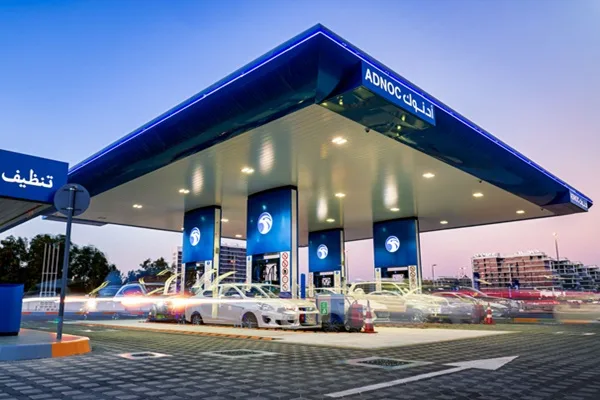
Nevertheless, the UAE still has quite a bit of oil left under its desert. The Abu Dhabi National Oil Company (ADNOC) can easily produce 5 million barrels per day, but being in OPEC, it had to keep output well below its capacity. Therefore, the UAE has been toying with the idea of quitting OPEC for years, and the Iran-US conflict was the straw that broke the camel’s back.
The UAE’s sovereign funds prefer stability, unrestricted trade and open shipping lanes as a hit on the global economy will translate into a drop on its return on investments. The decision to quit OPEC is in the national interest of the UAE as it hopes to increase petroleum sales to make up for a drop in its global investments.