
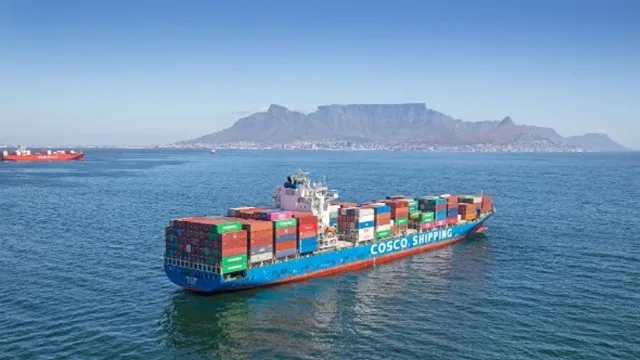
China – Africa Trade Surpassed $200B for First Half of 2026
On 15 July 2026, the China General Administration of Customs (GACC) released trade data for June 2026. For 1H26, the data indicate that the trade volume between China and Africa reached nearly USD 204 billion, representing a 24% increase compared to the USD 164 billion for 1H25. Unsurprisingly, China maintains a surplus of USD 56 billion, with exports to Africa reaching USD 130 billion, while imports amounted to USD 74 billion.
As the USA and EU erect barriers to goods from China, China is reorienting its sales and marketing efforts to other regions to compensate. The efforts seem to be paying off in Africa as several major shipping lines have expanded services along the China-Africa maritime routes.
| NO | COUNTRY | 1H26 $B | 1H25 $B | % CHG |
|---|---|---|---|---|
| 1 | South Africa | 33.6 | 26.5 | +22.9 |
| 2 | Nigeria | 22.4 | 18.3 | +22.7 |
| 3 | DR Congo | 18.3 | 14.6 | +25.3 |
| 4 | Angola | 14.3 | 11.6 | +23.2 |
| 5 | Egypt | 12.2 | 10.0 | +22.0 |
It is also important to note that the United States Dollar depreciated with respect to the Renminbi from 2025 to 2026. During 1H25, the average exchange rate for one dollar was RMB 7.18, whereas the average exchange rate during 1H26 is down to RMB 6.79, making Chinese goods more expensive if paid in USD, but could prove cheaper, if settled in RMB.
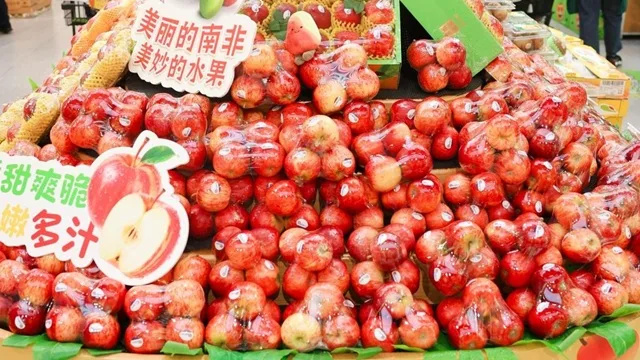
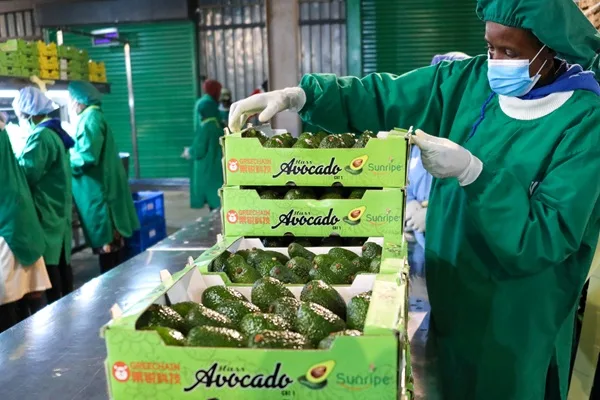
China enacted its zero-tariff policy for most African goods as of the 1st of May 2026. However, it would appear that only a handful of countries have benefited so far from this policy. Apples from South Africa, avocados from Kenya, cocoa from Côte d’Ivoire and oranges from Egypt experienced a surge, albeit from a relatively low base. Generally speaking, the biggest winners seem to be some African agricultural producers.
| NO | PRODUCT | HSCODE | 1H25 $B | 1H26 $B | % CHG |
|---|---|---|---|---|---|
| 1 | Electrical Equipment | 84 to 85 | 42 | 53 | +26 |
| 3 | Vehicles | 87 | 15 | 20 | +39 |
| 4 | Textile and Apparel | 50 to 63 | 15 | 17 | +13 |
Despite the late surge in imports from Africa to China, China still enjoyed a widening trade surplus with Africa, as much remains to be done in terms of structural upgrades to Africa’s industrial capacity. However, it can be reasonably expected that the zero-tariff policy will fully kick in during the second half of 2026, thereby narrowing the gap a bit.
Guinea is an interesting case as the #Simandou Mine started exporting iron ore to China at the end of 2025. At the moment, Guinea exports on average one million tonnes of iron ore to China, and in May 2026, shipment tonnage reached 2.2 million tonnes. Now, Guinea’s iron ore accounts for nearly 6% of Guinea’s total exports to China.
| NO | PRODUCT | HSCODE | 1H25 $B | 1H26 $B | % CHG |
|---|---|---|---|---|---|
| 1 | EV | 8703.80 | 30 | 52 | +75 |
| 2 | ESS | 8507.60 | 34 | 49 | +43 |
| 3 | PV | 8541.43 | 13 | 17 | +24 |

China continues to import large amounts of raw ores and crude oils from certain African countries. Other than traditional exports of machinery, electronics and apparel to Africa, China is pushing the #ThreeNewStuff, namely Electric Vehicles (EV), Energy Storage Systems (ESS), and Photovoltaics (PV).
It is usual to expect a better second half of the year as importers and retailers tend to stock up for the festive Christmas period in most markets outside China. Thus, the annual trade volume is forecasted to well exceed USD 400 billion for 2026, compared to USD 348 billion in 2025. Based on the international trade data up to June 2026, Africa contributes nearly 6% to China’s global trade, and may account up to 10% within a few years.