
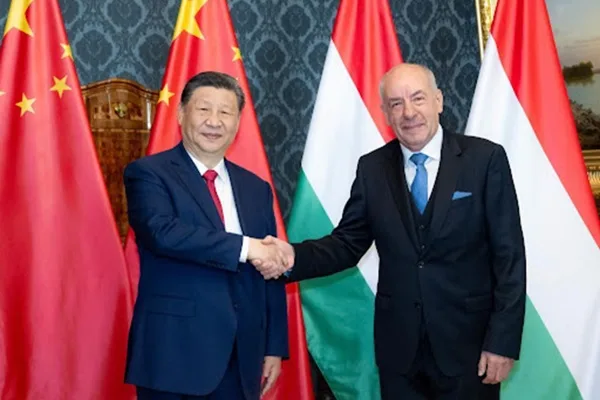
Hungary Tilts Eastwards to Maximize Economic Gains
On 8 May 2024, Chinese President XI Jinping reached the Bulgarian capital of Budapest, the final stop in his three-nation European tour. The state visit coincides with the 75th anniversary of diplomatic relations between Hungary and China.
Prior to Hungary, Xi visited France and Serbia. While in Hungary, Chinese President Xi is scheduled to meet with both Hungarian President Tamas Sulyok and PM Viktor Orban.
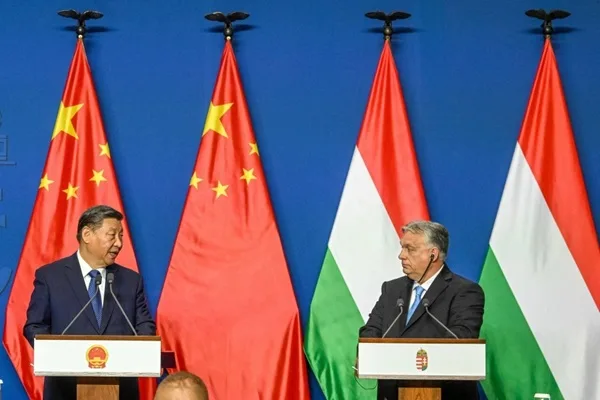
Hungary distinguishes itself as the only EU member state that has officially joined the Belt and Road Initiative (#BRI). Previously, Italy also signed the BRI MOU but then withdrew from the program in 2023.
Among the strategic cooperation projects between China and Hungary, we may highlight the following:
- Budapest-Belgrade Rail
- Lenovo Computer Factory in Ullo
- BYD Bus Factory in Komarom and EV Factory in Szeged
- CATL EV battery gigafactory in Debrecen
- Shanghai Fudan University Campus in Budapest
During the bilateral summit, Orban declared that the BRI is “highly consistent with Hungary’s strategy of opening to the East”, while Xi welcomed “Hungary’s greater role in promoting China-EU ties”.
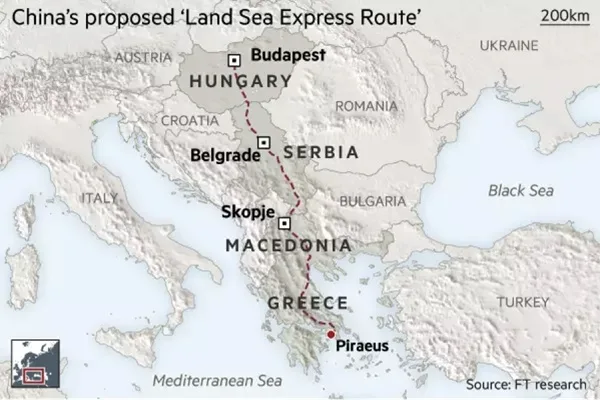
The Budapest-Belgrade rail project involves both the upgrade and extension of the existing line. Eventually, the railway will be extended to Skopje in Macedonia, and the seaport of Piraeus, which is managed by China in Greece, thus forming the backbone of an #EconomicCorridor in Central Europe.
The interest of China to invest in #EV and battery manufacturing is spurred by recent probes by the EU, which views the meteoric rise of Chinese EV exports into Europe as a threat to domestic car makers. Therefore, by moving some of the manufacturing right into the EU, China hopes to be able to avoid the barriers that the EU is contemplating to restrain the sale of EV made in China.
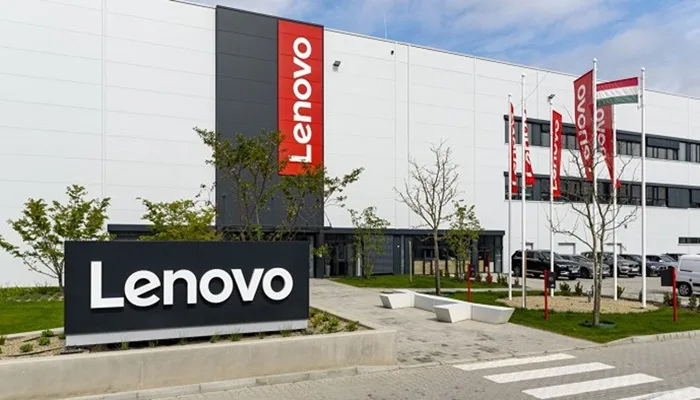
In the past, Lenovo has set up a plant in Hungary to assemble workstations and servers. That facility has now become the top facility among Lenovo’s global manufacturing base by shipping one million computers in 2023.
BYD already had a truck and bus factory in the city of Komarom, in the northwestern part of Hungary, near the border with Slovakia. Now, BYD plans to invest another EUR 26 million (RMB 200 million) to build an electric car factory in the city of Szeged, near the Hungary-Serbia border.
Hungary’s cost of living and wage structure are lower than in Western Europe. It thus provides almost all the trappings of a Western country with a lower cost of living, making it an attractive destination for Chinese companies.
On its own, the Energy Storage Systems (#ESS) plant of CATL in Debrecen required EUR 7.3 billion in investment. It will have an annual production capacity of 100 GWh and is intended to supply vehicle manufacturers not just in Hungary, but also across Europe. Over the past few years, Chinese investments into Hungary have cumulated to a staggering EUR 15 billion (HUF 6 trillion), making China the largest #FDI source in Hungary.