

Tunisia Ramps Up its Energy Transition with Series of Solar Projects
Tunisia has already awarded contracts for four utility-scale #PV projects with a total generation capacity of 1.7GW. The solar farms are expected to come online during either 2025 or 2026.
All the projects are undertaken by Independent Power Producers (#IPP), along with a Power Purchase Agreement (#PPA) signed with Tunisia’s National Electricity Company, Société Tunisienne de l’Electricité et du Gaz (STEG).
The first solar farm is a 200-MW one in Kairouan, which will be built by Saudi Arabia’s ACWA Power (SRSE 2082). It is expected to become operational in mid-2025.
The second set of solar farms is in Taatouine with a total capacity of 400 MW. UAE’s AMEA Power and Norway’s Scatec (OSE: SCATC) are the main developers and plan to complete the projects by the end of 2025.

The third set of projects will add 500 MW of solar power in Sidi Bouzid, in central-western Tunisia. The projects will be built by a number of companies, including Scatec, Aeolus (part of Toyota Tsusho Group), and Eurus Energy Holdings. The projects have various timelines and are expected to go online in 2026 and 2027.
The fourth portfolio of PV projects with a total capacity of 600 MW is located around Gafsa, in southern Tunisia. Here, a consortium consisting of EDF, Masdar, and local companies is the main developer. The last farm is expected to be completed by mid-2026.
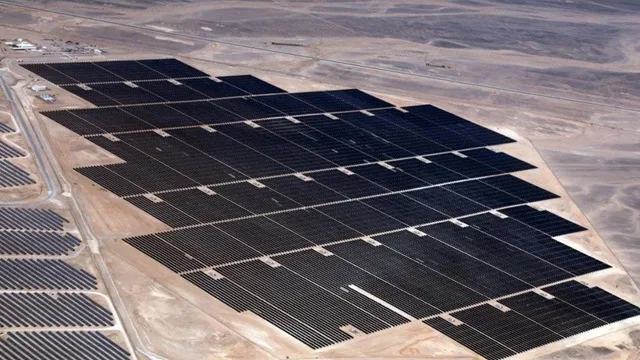
In addition, at the end of March 2025, the Energy Ministry of Tunisia announced that it has granted licenses to another more PV plants with an additional capacity of 500 MW. The total value of these new PV projects is estimated to bring in USD 386 million into the Tunisian economy. In the new wave of IPP, we note Qair International, Voltalia, Norway’s Scatec, and Japan’s Aeolus, a subsidiary of Toyota Tsusho.
Over the past few years, Tunisia has ramped up its #EnergyTransition program with a target of enabling at least 3.8 GW of renewable capacity by 2025. A good portion of the surface area lies in the Sahara Desert with bountiful solar illumination; thus, solar energy is basically a freely available resource waiting to be tapped into. Tunisia aims to make 35% of its energy mix based on renewable energy by 2030.