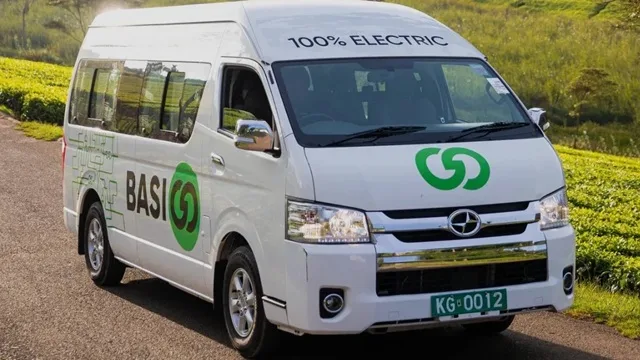
BasiGo Buses Accelerate Toward Net Zero As 100th eBus Hits the Road
The #eMobility startup BasiGo celebrated the entry into operation of its 100th electric bus on 31st of July, 2025. The company started in Kenya in 2022 and has since expanded into Rwanda.
Back in 2022, BasiGo received seed funding from a consortium of Silicon Valley VC firms led by Novastar Ventures. Then, in 2024, it received Series A financing from another set of investors led by Africa50 with Novastar Ventures still on board. In addition, it contracted a loan from the US DFC and UK BII to accelerate its expansion.
BasiGo plans to contribute to #decarbonization drive with the support of policymakers. The Government of Rwanda has put into place a policy to ban diesel buses in Kigali by 2026. Similarly, the Kenyan government has also placed #EnergyTransition high on its agenda.
BasiGo is not just an operator but has its own assembly plant in Nairobi and has set up maintenance centers regionally. It currently employs more than 1,000 people in Kenya and Rwanda.
On a daily basis, the BasiGo fleet transports more than 20,000 passengers, avoids the emission of 250 tonnes of carbon dioxide (#tCO2) resulting from burning of 5,000 liters of diesel if combustion engines were in use.
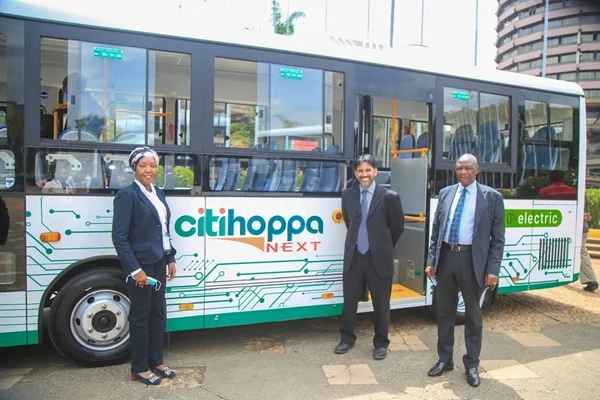
After Nairobi, BasiGo even launched a long-distance inter-city loop around the Aberdare National Park: Nairobi – Naivasha – Nakuru – Nyahururu – Nyeri – Thika – Nairobi. The route is served by electric buses which can be fully charged in 1.5 hours and run for 300 kilometers. Rapid recharge stations have also been set up along the route.
To adapt to local conditions, BasiGo is partnering with cooperatives 4NTE and Manchester Travellers Coach in Kenya. The model operates on a Pay-As-You-Drive (PAYD) to facilitate financing and to promote the adoption of the eBus.
BasiGo applied a similar #PAYD model to launch the intercity service in Rwanda linking Kigali, Muhanga, Nyanza, and Huye. In Rwanda, BasiGo partnered with Volcano Express.
The buses are also equipped with GPS devices, allowing for real-time tracking of the buses. The adoption of the latest technologies and online tracking contribute to the optimization of the fleet management and ensure a better customer experience.
Now, BasiGo has set its sights firmly on the regional market and is seeking to expand into the East Africa Community (#EAC). In the next few years, BasiGo plans to grow its fleet to 1,000 eBuses.