
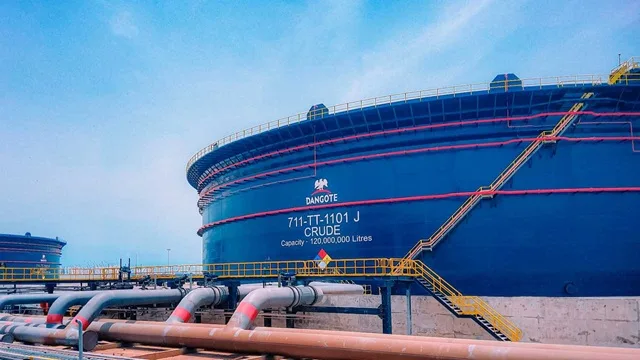
Dangote Picks Kenya Over Tanzania for $17B East African Oil Refinery
On 7 July 2026, Aliko Dangote officially announced that he has picked Kenya to build its East African Oil Refinery. Initially, Tanzania was considered as the first option, but after months of talks and speculation, Dangote seems to have finally made up his mind. As for the location, Mombasa seems to be the obvious choice, but, Lamu is now also being considered, as soil testing has been initiated there.
The cost of the East African Oil Refinery Project is estimated to be up to USD 17 billion. It will have a capacity to process 700,000 barrels per day (bpd) of crude oil and aims to supply the local Kenyan market as well as the East African Community (EAC). The financial montage involved a mix of corporate liquidity, bonds, and even a multinational Initial Public Offering (IPO).
Several reasons motivate this decision. Firstly, Mombasa and Lamu both have a depth of 15 meters, compared to Tanga’s 13 meters, meaning that Kenya can accommodate larger oil tankers. Secondly, Kenya’s domestic market presents a stronger demand, with Kenya consuming 4 billion liters of petroleum, compared to 3.5 billion liters for Tanzania. Last but not least, the Government of Kenya strongly supports Dangote’s requirement for protecting the local industry by erecting barriers against hostile measures such as dumping.
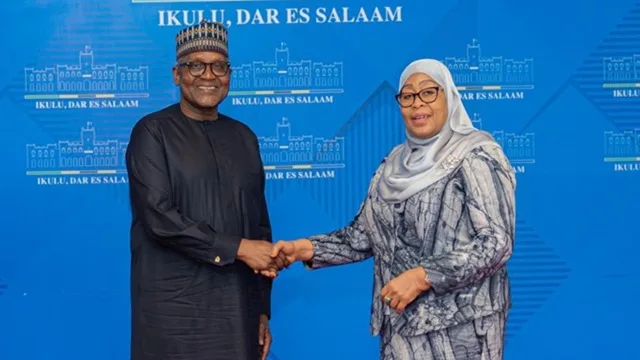
As an interesting anecdote, Tanzanian President Samia Hassan expressed ‘utter surprise’ when Kenyan President William Ruto announced the project in Tanzania at a recent conference. Aliko Dangote then visited Tanzania to meet with President Samia Hassan before coming to his decision.
Tanzania still retains the terminal for the transport of crude oil via pipeline from landlocked oil-producing countries such as Uganda. However, with this Project, Kenya will benefit from the downstream value-addition and petrochemical production capabilities.
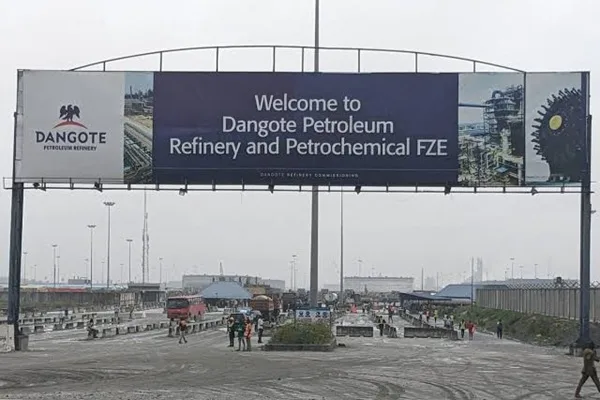
The East African Oil Refinery will be similar to the one built and operated by Dangote at the Lekki deep-water port. The Lekki refinery has a design capacity of USD 650,000 bpd and cost USD 19 billion to build. The Nigerian refinery can meet more than 60% of the domestic demand in gasoline and has emerged as the world’s largest exporter of jet fuel, by shipping overseas nearly 160,000 bpd. Due to strong demand and great potential for growth, Dangote is already contemplating the expansion of its refining capacity in Nigeria to reach 1.4 million bpd.