
US Senate Votes in Favor of Extending AGOA Till End of 2028
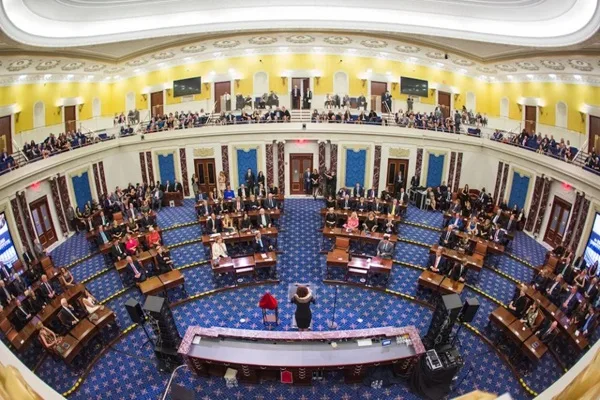
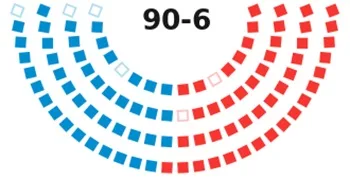
On 8 August 2026, the US Senate voted in favor of the extension of AGOA by 90 to 6 votes, indicating strong bipartisan support. Only 2 Republicans and 4 Democrats voted against the H.R. 6500 Bill. The AGOA Extension Bill was passed as part of the broader Continuing Appropriations and Extensions Bill 2027.
In February 2026, the US House of Representatives already passed H.R. 6500 to extend #AGOA for three years until the 31st of December, 2028. In the interim, Congress had authorized AGOA to be extended for one year till the end of 2026.
The foundation of the AGOA remains unchanged, tying preferential access to the US market to opening up African markets to US businesses, and general adherence to US national interests. The Third-Country Fabric (TCF) is carried forward by allowing lesser developed countries to import yarn or fabric from non-AGOA countries to produce apparel destined for the US market. Opponents underscored that the provision of fabric from third-party countries removes the incentive for companies to invest in spinning, weaving, and dyeing in order to build up the whole textile value chain.
However, the application of the Third-Country Fabric is subject to certain notable exceptions. South Africa can no longer benefit from it due to its relatively advanced development stage. Recently, South Africa has also experienced an exodus of foreign workers due to a rise in xenophobia. On the other hand, Mauritius can still take advantage of TCF since it is a success model under AGOA and is a Small Island Developing State (SIDS).
“AGOA for the 21st century must demand more from our trading partners and yield more market access for US, farmers and ranchers … ensuring more reciprocal trade with our Sub-Saharan African partners to strengthen America’s global competitiveness.”
US Trade Representative Jamieson Greer
As per the recommendation of the Ways and Means Committee, new language is introduced to prioritize and streamline access and processing of #CriticalMinerals in AGOA countries. The Committee highlights American strategic interests and underscores the risk of leaving a void for competitors to exploit.
Only minor amendments were introduced, and the House of Representatives is expected to incorporate these without great difficulty upon return from the summer recess in September 2026. Finally, President Trump would have to sign off for it to become law.