

Drilling Down the 2025 China-Africa Trade Data
China Customs has released data showing that the 2025 China-Africa trade volume has reached USD 348 billion, displaying a robust 18% growth compared to 2024. The first striking point is that the African Union exhibits the fastest growth rate of all blocs with which China trades.
As expected, the largest decline came from the USA as a consequence of Trump’s #tariffs. Part of the fluctuations can be explained by the delocalization of Chinese factories and the rerouting of goods via third-party countries to get around the tariff barrier. China had to reorient its trade to compensate for losses with certain countries or regions, and neighboring ASEAN remains at the top of the league table of blocs trading with China.
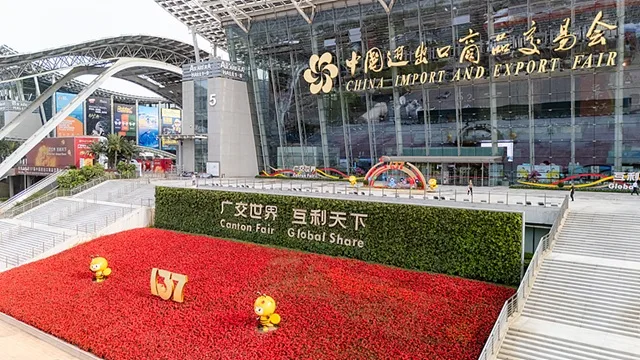
From a provincial perspective, the emergence of Hunan province is worth noting. Unsurprisingly, coastal provinces traditionally took the lion’s share of China’s international trade. Thus, Zhejiang, Guangdong, Jiangsu and Shandong consistently appear at the top of the table. The seaports in Shanghai, Ningbo, Guangzhou, Shenzhen, Qingdao and Tianjin are the most commonly used for trade with Africa.
Since the Chinese central government designated Changsha, the provincial capital of the province of Hunan, as the permanent seat of the China-Africa Economic and Trade Expo (#CAETE), Hunan has started emerging as a key actor along the China-Africa axis and is the first inland province to do so. The coastal province of Fujian has recently redoubled efforts to boost its exports as well.
Chinese imports from Africa are dominated by petroleum and minerals. Thus, Africa, mainly Nigeria and Angola, now accounts for nearly one-quarter of all Chinese oil imports. With the flare-up of the US-Iran conflict, Africa could get a boost in its oil exports to China. China is highly dependent on Africa for a number of its mineral inputs, such as cobalt (99%), graphite (98%), chromium (87%), thorium (86%), manganese (85%), copper (75%), titanium (72%), aluminum (70%), and tantalum (60%).
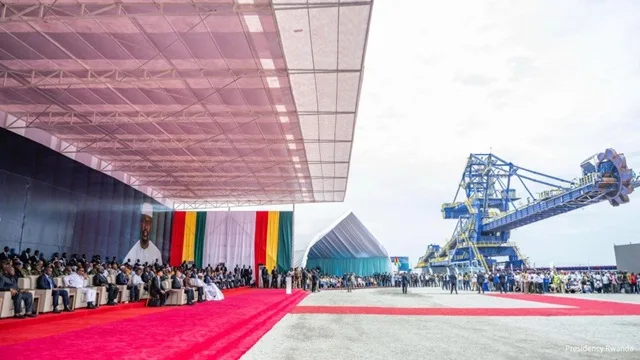
Africa is the world’s largest gold producer and is naturally a major supplier to China. However, due to the use of intermediary countries such as the UAE and the prevalence of illicit flows, exact data is hard to come by. Zimbabwe has emerged as a significant supplier of lithium (15%), while Guinea is emerging as an alternative iron ore source with the operationalization of the game-changing #Simandou mining complex.
As for Rare Earth Elements (#REE), China imports significant amounts of ores from Africa, including Neodymium (Nd), Praseodymium (Pr), Dysprosium (Dy), Terbium (Tb), Yttrium (Y), and Niobium (Nb). Data is harder to obtain because Rare Earths tend to occur naturally with other minerals and are usually lumped into another broader category by customs.
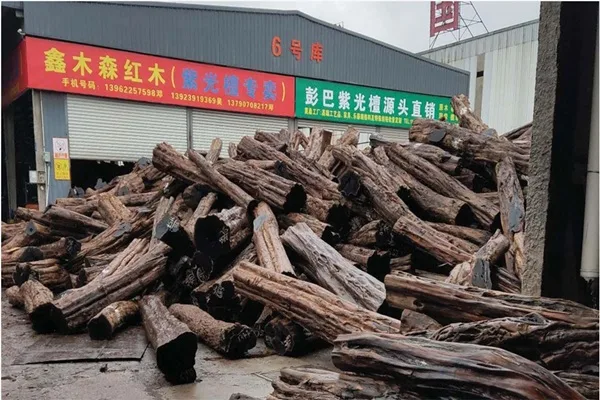
Another category that is of significance is agricultural produce. Thus, timber, ground nuts, macadamia nuts, cashew nuts, cotton yarn, cotton seed oil, castor seed oil, sesame seeds, peaches, strawberries, citrus fruits, animal skins, tobacco leaves, and vanilla, are some of the top products in the agricultural category that China imports from Africa. However, agricultural produce tends to be closely controlled by non-tariff barriers (#NTB) such as stringent sanitary and phytosanitary (#SPS) protocols.
On the other hand, China exports almost every imaginable manufactured product to Africa. However, looking more closely, the #ThreeNewStuff are experiencing sustained sales: they are photovoltaic (PV) panels, electric vehicles (EV), and rechargeable batteries.
Solar kits have gone a long way to enhance #ElectricityAccess across Africa. In the case of Africa, the EV category includes a significant share of electric motorbikes and three-wheelers. All these products are actively promoted as enablers for the #EnergyTransition in an effort to meet the Sustainable Development Goals (#SDG).
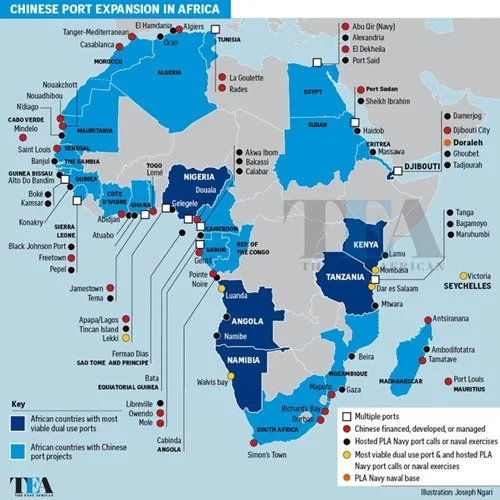
In line with the #industrialization drive in Africa and the delocalization trend in China, more and more Chinese factories are setting up on the African continent. To assist in this strategy, China has invested in the creation of Special Economic Zones (#SEZ) and the upgrading of several seaports all around Africa.
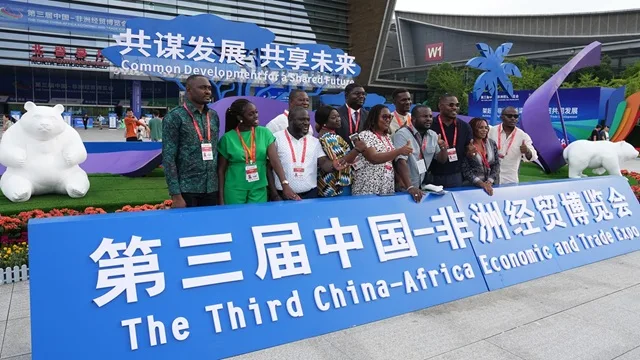
In terms of activities and platforms, the flagship conference remains the Forum on China-Africa Cooperation (#FOCAC). Then, we have the marquee China-Africa Economic and Trade Expo (#CAETE). Obviously, Africa can also join in some of the global initiatives of China, viz, the Global Governance Initiative, the Global Civilization Initiative, the Global Development Initiative, and the Global Security Initiative. Last but not least, almost all African countries have signed up for the Belt and Road Initiative (#BRI).
Given the current challenging global environment characterized by trade turmoil and geopolitical conflicts, China might have to recalibrate its trade and foreign policies. For starters, Chinese Foreign Minister Wang Yi announced that China will provide a zero-tariff policy to all African countries during the 4th China-Africa Economic and Trade Expo in June 2025 (#CAETE2025). A recent announcement confirms that the measure will come into effect as of the 1st of May 2026. To address structural imbalances, substantial investments are needed to build up the production capacity and upgrade the transport infrastructure in Africa.
In that particular context, some experts believe that Africa could soon surpass America in terms of trade volume if the US-China trade war persists. In that context, the China-Africa trade volume is projected to reach USD 400 billion in 2026.
| Rank | Country | Trade Volume | Exports to China | Imports from China | Trade Balance |
|---|---|---|---|---|---|
| 1 | South Africa | 53.6 | 30.6 | 23.0 | +7.6 |
| 2 | Nigeria | 28.0 | 3.2 | 25.0 | -21.8 |
| 3 | DR Congo | 26.7 | 21.6 | 5.1 | +16.5 |
| 4 | Angola | 20.8 | 16.0 | 4.8 | +11.2 |
| 5 | Egypt | 20.8 | 0.8 | 20.0 | -19.2 |
| 6 | Liberia | 19.7 | 0.1 | 19.6 | -19.5 |
| 7 | Guinea | 18.2 | 12.0 | 6.2 | +5.8 |
| 8 | Algeria | 15.3 | 1.3 | 14.0 | -12.7 |
| 9 | Ghana | 14.1 | 2.7 | 11.4 | -8.7 |
| 10 | Tanzania | 11.3 | 0.7 | 10.5 | -9.8 |