
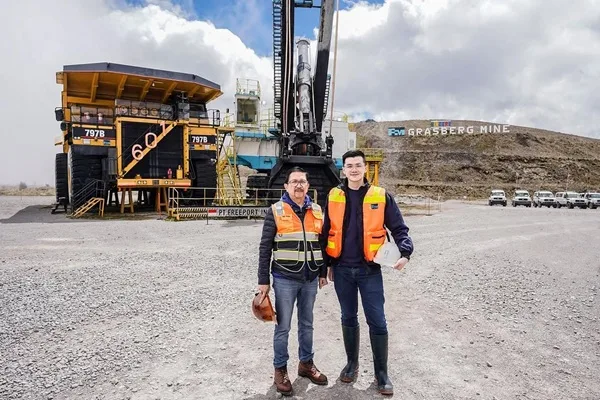
Freeport Indonesia to Produce 1.1 Billion Pounds of Copper Cathode at Grasberg Mine for 2026
On 13 April 2026, Freeport Indonesia CEO Tony Wenas announced that his company is ramping up production and is targeting 1.1 billion pounds of copper cathode and 0.8 million ounces of gold for 2026. For 2027, the target is 1.5 billion pounds of copper cathode and 1.3 million ounces of gold.
This move is a return to normalcy after the landslide incident in September 2025. At that time, #copper world prices spiked, since this single mine accounts for nearly 4% of global output. Freeport-McMoRan (NYSE: FCX) has been involved in Indonesia since 1988, following the discovery of the Grasberg deposit, which turned out to be one of the most profitable in the world due to large reserves of both copper and #gold.
After extracting and exporting copper and gold for decades, Freeport Indonesia divested its stake to the Government of Indonesia, which owns a 51% stake since 2018. In 2023, Jakarta issued a broad ban on the export of raw mineral ores, including copper concentrates, allowing only refined copper — at a minimum cathode level — to be exported.
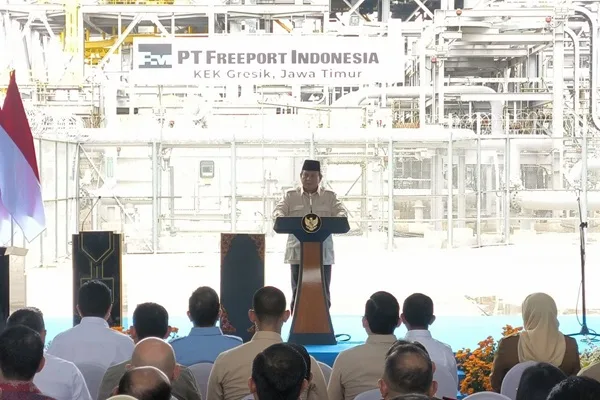
Now, Indonesia boasts the world’s largest single-line copper smelter at Gresik, East Java. Hungry for copper for the buildout of AI data centers, the USA approached Indonesia to secure this critical metal.
However, Indonesia has seen this movie before with China for its nickel, one of the #CriticalMinerals needed for making batteries of Electric Vehicles, a sector where China’s ambitions to be a world leader. Led by Zhejiang Tsingshan and Jiangsu Delong, Chinese companies obtained 90% of the mining concessions and controlled 70% of the refining capacity. This large concentration in Chinese hands left Jakarta highly dependent on Chinese capital, technology, and pricing.
Therefore, Jakarta does not want the ‘China Play’ for nickel to become the ‘American Way’ for copper. Indonesia’s policy is now structured to ensure geopolitical balance and equity control, while protecting its national interests. As a sign of the rebalancing toward the West, Indonesia and the USA inked a Major Defense Cooperation Partnership (MDCP) on 13 April 2026 to enhance peace and stability in the #IndoPacific.
However, many challenges lie ahead. First, the government must strike the right balance between state control and attracting private or foreign enterprises, to avoid scaring away further investment. In addition, the government must diligently handle the concerns of local communities about environmental degradation.
In other words, Indonesia must assert its mineral sovereignty by navigating through superpower rivalry and ecological pressure. Critics have called the new policy ‘resource nationalism’, but Indonesia is leading the way for the resource-rich countries of the #GlobalSouth on how to get a fair share of a mineral wealth. The race for #CriticalMinerals is full on, and now is as good a time as any to cash in on the boom.