

Senqu Bridge Provides Water Lifeline from Lesotho to South Africa
On 22 April 2026, South African President Cyril Ramaphosa and Lesotho King Letsie III officially inaugurated the Senqu Bridge in Mokhotlong, improving the connectivity between the two countries. Ramaphosa hailed it as the world’s largest transnational water project, and in a show of gratitude, South Africa will extend ZAR 30 million in relief funds to Lesotho.
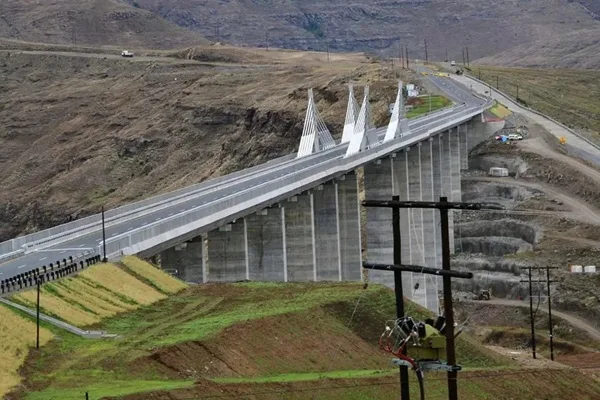
The Senque Bridge is 825 meters long and is 90 meters off the ground at its highest point. The Bridge was part of the Lesotho Highlands Water Project, which aims to increase water exports annually to South Africa from 780 million cubic meters to 1.3 billion cubic meters, representing more than a 16-fold increase in volume.
“South Africa is a water-scarce country and the waters of Lesotho’s highlands are vital to our country’s development. We remain forever grateful to the great Basotho nation for making water resources available to us.”
South Africa President Cyril Ramaphosa
The Bridge goes over the reservoir behind the Polihali Dam, which is still under construction and forms part of the mega project. Once the dam is filled, the pipes can take water from the reservoir thus formed. The Project is vital for South Africa’s #WaterSecurity.
The total cost of the project is estimated at USD 3.2 billion, while the bridge alone cost USD 144 million. Other than the bridge and dam, the Project also involves the construction of 120 kilometers of tunnels to channel water from Lesotho’s mountainous regions to South Africa’s river systems.
“The royalties and infrastructure that flow from this project are not incidental benefits. They are central to our development finance strategy.”
Lesotho PM Sam Matekane
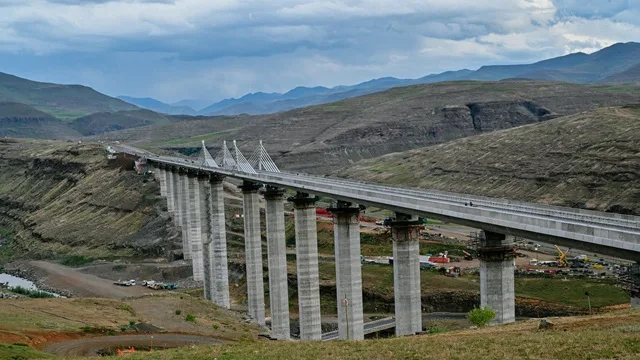
The Senqu Bridge is not just for road traffic, but more importantly, it carries water from Lesotho to Gauteng Province in South Africa. It is estimated that 60% of water consumed in Gauteng is actually supplied from Lesotho. South Africa buys the water from Lesotho and pays a handsome amount for it every year, given the volume exported.
The first phase kicked off in 1990 following the signing of a water treaty between South Africa and Lesotho. Some 1,200 people, mostly from Lesotho, were mobilized during the construction of the bridge. The second phase is expected to be completed by 2029.