
China Blocks G20 Joint Statement Criticizing its Excessive Trade Surplus
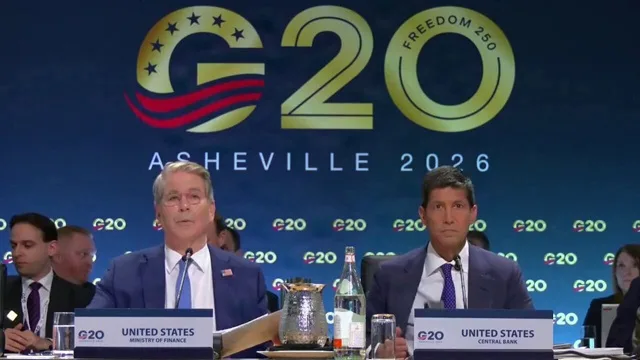
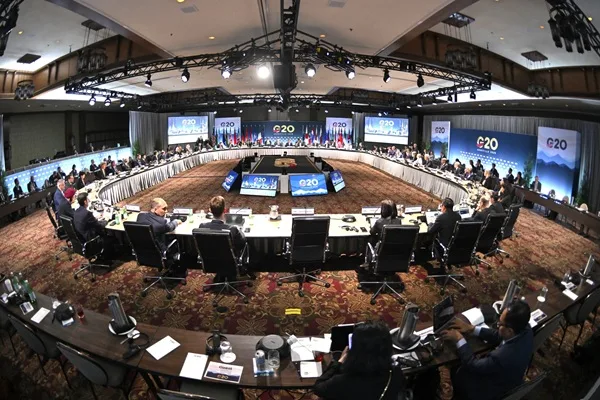
From 31 August 2026 to 1 September 2026, US Treasury Secretary Scott Bessent, alongside newly appointed Federal Reserve Chair Kevin Warsh, chaired and hosted the G20 Finance Ministers and Central Bank Governors (FMCBG) Meeting in Asheville, located in western North Carolina, USA. The main theme of this meeting was ‘Promoting Shared Prosperity through Resilient, Sustainable, and Inclusive Growth.’
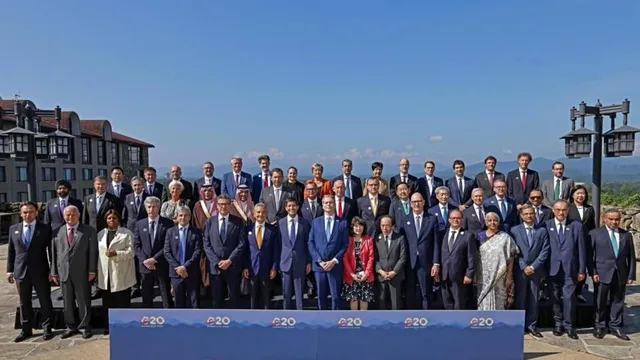
As host, the US used its prerogative to invite the Russian Finance Minister Siluanov. The EU expressed sharp criticism of this decision, as European countries view Russia as an aggressor against Ukraine, and the conflict has upended many European economies. Finally, the Russian Minister did not appear in the traditional family photo.
Ironically, Russia called out the exclusion of South Africa as an ‘egregious violation.’ The US alleges South Africa is abusing its white people, whereas South Africa had filed a case against Israel at the International Court of Justice. Russia argued that the G20 is a collegial forum where no single nation, even the host, has the authority to kick another one out without due consultation with others.
On the other hand, the US fully utilized the Meeting to ramp up pressure on Iran and China. In the case of Iran, the US reiterated the need for solidarity to apply economic pressure on the Iranian regime. Bessent also reiterated warnings to countries siding with Iran.
Secretary Bessent also castigated China’s export-led economic model that creates trade imbalances. Bessent justified Trump’s tariffs as necessary to counterbalance the excessive trade surplus enjoyed by China. He urged other G20 countries to follow America’s lead by applying #tariffs on Chinese goods to protect their local industry and jobs.
On the other hand, China asserted that its global trade achievements are the resultant of its huge economies of scale, tight vertical integration, and high-speed logistical optimization. China took the lead in various product categories as it painstakingly enacted policies and exerted sustained efforts to develop ecosystems to control global supply chains (#GSC).
Despite the punitive tariffs imposed by the USA, China’s international trade volume exceeded USD 4 trillion, with a trade surplus of over USD one trillion. The US even accused China of using third-party countries as transhipment hubs to fake the country of origin. It appears that China managed to diversify its markets or find a workaround for the tariffs and still managed to grow its exports.
As for the economic structure, the US is a consumer-led economy with nearly 70% of its GDP coming from domestic consumption, whereas China’s consumption accounts for only 40% of its national GDP. The global average of domestic consumption is around 6#% of GDP.
Due to the difference in perspective, the Meeting was unable to issue a consensual joint statement. As a workaround, Secretary Bessent plans to issue a Chair’s Statement. The next major event for the Finance Track is scheduled to take place in Bangkok, Thailand, on 15 October 2026, before the G20 Leaders’ Summit scheduled to take place in Miami in December 2026.