
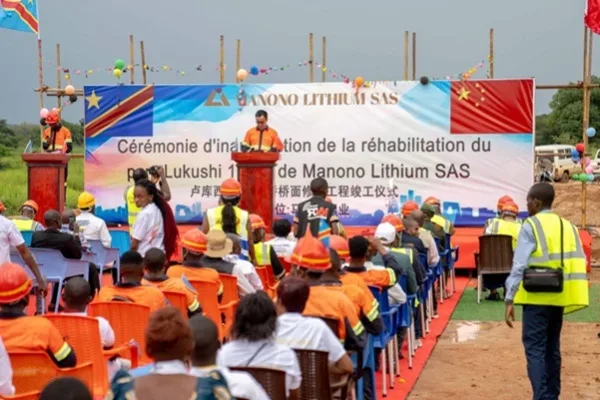
Zijin’s Manono Lithium Mine in DRC to Commence Output in June 2026
During the African Mining Indaba 2026 (#AMI2026) in Cape Town, Cominiere MD Alpha Mwidi declared the Manono #Lithium Project is set to ‘produce its first tonnes’ by June 2026. Zijin Mining holds a 61% stake, while the DRC Government 39%, via the state-owned enterprise (SOE) Cominiere. Back in 2025, the company issued guidance that it expected production during 1Q26.
On its side, Zijin Mining issued guidance on the 9th of February 2026. The Board of Directors of Zijing Mining has approved the #ZijinVision2035 strategic development plan as the three-year plan from 2026 to 2028. In brief, the targets for its main minerals for 2026 are as follows: 1.2 MT for copper, 1.05 MT for gold, and 520 T for silver. Lithium is viewed as a new business with lots of room for growth.
Previously, the DRC Government took back the license of Manono from the Australian firm AVZ Minerals, citing delays in implementation. AVZ Minerals went to international arbitration, while the DRC Government maintains it acted within the law, as sufficient time was given to AVZ to demonstrate progress. At the other side of Manono, US firm KoBold Metals prefers to adopt a wait-and-see attitude until legal issues are resolved. In addition to legal risk, the Project also has to factor in the instability around the eastern border region where rebel forces are active.
The price of #lithium has dropped sharply since its high in 2022. Additionally, some vendors recently unveiled #sodium batteries as an alternative to lithium ones. But China seems unfazed by such events, as it is playing the long-term game. The goal of China is to dominate the global market for Electric Vehicles (#EV) by controlling the entire ecosystem from minerals, batteries, up to the assembled vehicle.
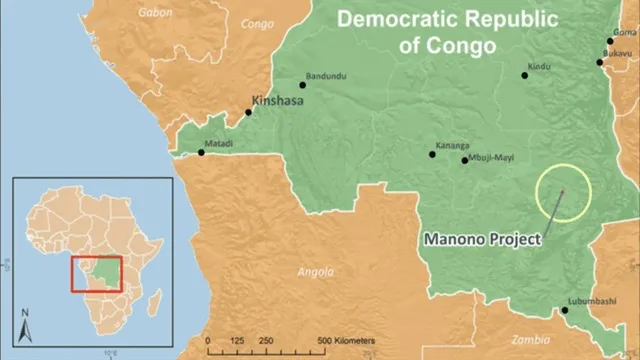
Based on geological surveys, the Manono deposits might have reserves of 400 million tonnes of ore, averaging 1.65% lithium content. The Manono deposits are located in southeast DRC, toward the border with Tanzania and Zambia.
All of the lithium produced will be bought by Zijin and shipped back to China, possibly utilizing the Tanzania-Zambia Railway (#TAZARA) under upgrade. Zijin declared that it has invested nearly USD one billion into the Manono Project. Cominiere did not need to invest one single cent, but as the state actor, it will receive 39% share of the venture in line with the negotiated partnership and the Mining Code that favors closer involvement by the state.
It is said that Zijin Mining will inject USD 1.4 billion into the Manono Lithium Project to build it into one of the largest lithium projects in the world. By 2028, The Project is set to produce 130,000 tonnes of lithium carbonate equivalent annually, representing 5% of global lithium output.
Eventually, the Project will ramp up extraction to yield about 850,000 tonnes of lithium concentrate annually. The smelter is designed with an annual capacity of 500,000 tonnes of lithium sulfate and is expected to become operational by the end of 2026.