
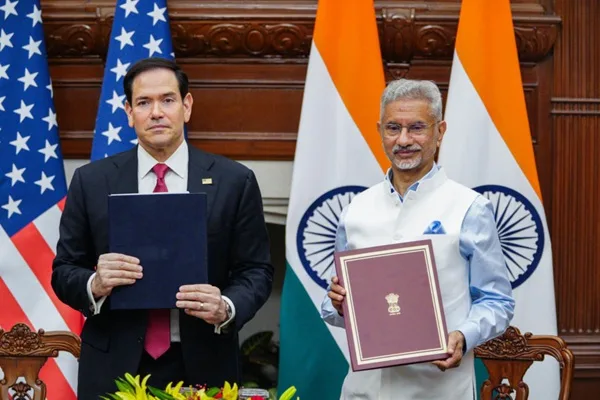
US and India Seal Landmark Critical Minerals Pact
On 26 May 2026, US State Secretary Marco Rubio and India’s External Affairs Minister Subrahmanyam Jaishankar signed a Critical Minerals Framework Agreement in New Delhi. This particular collaboration follows the tightened export controls by China on Critical Minerals, and #RareEarths in particular, putting at risk the military, medical, and electronic sectors. This Agreement follows the inclusion of India within related US-led initiatives such as #PaxSilica and #FORGE (Forum on Resource Geostrategic Engagement).
In addition to the bilateral agreement, a plurilateral agreement on Critical Minerals Collaboration was signed by all four #Quad member states, viz, US, Japan, India, and Australia. The Foreign Ministers of Quad were in New Delhi for a meeting and agreed to jointly mobilize up to USD 20 billion to diversify and secure the supply chain of #CriticalMinerals.
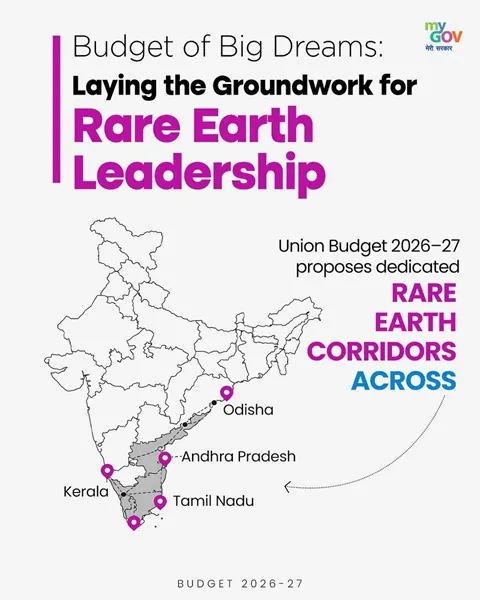
The Agreement spans the entire life cycle of Critical Minerals, from extracting, processing, recycling, and financing. In particular, the US plans to foster exploration and exploitation in India to monetize its mineral resources. The US has to import half of the #CriticalMinerals that it needs. On the other hand, India is currently only producing four Critical Minerals, viz, copper, graphite, phosphorus, and titanium, while most of its mineral resources remain untapped.
Past surveys estimated that India holds a reserve of 13 million tonnes of #monazite, which is rich in rare earth elements (#REE). For comparison, as the world’s largest producer and refiner, China has about 44 million tonnes of rare earth minerals. Therefore, the United States Geological Survey would be ready to support India in implementing its ‘Rare Earth Corridors’ and scale up production.