
EC Proposes Industrial Accelerator Act to Reindustrialize Europe While Accelerating the Energy Transition
Faced with the energy crisis caused by the conflict in the Middle East, the European Commission has published the draft of the Industrial Accelerator Act (IAA) on 4 February 2026. The IAA aims to promote low-carbon products made in the EU. The new law is an earth-shaking 180-degree shift in Brussels, as the EU has long upheld and defended globalization and free markets.
Commenting on the new law, EC Vice-President responsible for Industry Stephane Sejourne noted that the change of doctrine would be unthinkable even just a few months ago. However, the US-Iran conflict appears to have tilted the balance since the EU now believes that without a strong indigenous industrial base, it cannot exert #StrategicAutonomy and implement the #EnergyTransition.
The IAA was spearheaded by France, which recalled how the EU basically outsourced the PV industrial capacity to China. Now, nearly 100% of all PV panels and 50% of batteries used in EU are made and imported from China.
After much debate, the EC decided that it would allow the possibility for certain like-minded non-EU countries, such as the UK and Japan, to join in the initiative as long as there is reciprocality. Thus, British and Japanese car makers would potentially be categorized as ‘domestic producers’ for Electric Vehicles (#EV). On the other hand, countries with closed markets, such as the US and India, would likely not benefit from such classification due to a lack of reciprocity.
Specifically, the IAA aims to push up the share of manufacturing in the overall EU’s #GDP from 14% in 2025 to 20% by 2035. To reach this goal, EU member states will be required to satisfy #LocalContent targets for certain strategic sectors, such as green technology and electric vehicles. For instance, 70% of the components of EV, excluding the battery, would need to be made in the EU if procured by governments or benefiting from public funds.
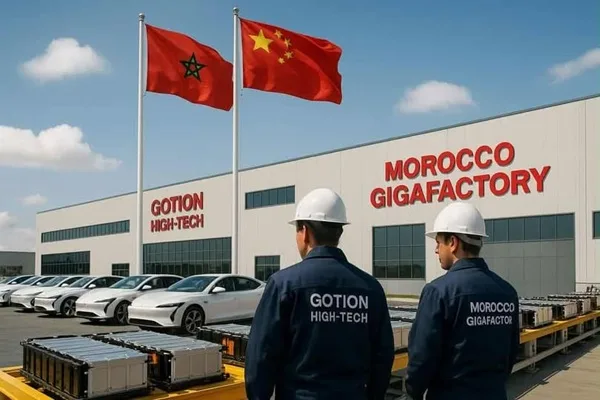
China has invested heavily in car-making and battery production in Hungary and Spain in a bid to grab the lion’s share of the lucrative EU market. Morocco could emerge as the winner of the new regulatory environment, because it enjoys proximal and preferential access to the EU market through a Free Trade Agreement (FTA), while not having to follow the restrictive EU laws. China also expressed concern about the IAA since it imposes restrictions on its #ThreeNewStuff, namely PV, EV and ESS, that it is currently promoting with vigor. More generally, solar, wind, hydrogen and nuclear power projects must meet EU origin thresholds.
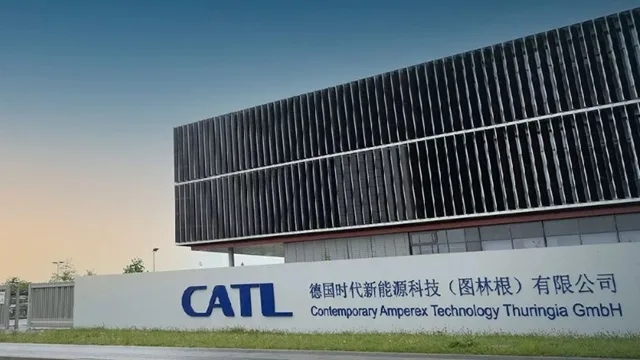
The German Engineering Federation (VDMA), which regroups some 3,000 small and medium enterprises (#SME), observed that the focus on local content distracts from the EU’s real issues, notably high costs and lethargic innovation. China’s CATL operates a battery gigafactory in Amstadt, Thuringia, while other Chinese firms are planning similar projects in Saarland and Bitterfeld-Wolfen.
As a protection for related industries, authorities would be required to buy European green steel and aluminum, even at higher prices. It is believed that the price premium is necessary to push the decarbonization agenda and keep these strategic industries within the EU. In a related move, the UK Government has decided to acquire its steel plant back from Jingye Steel following compensation.
Mirroring China’s policies, large projects with a Foreign Direct Investment (#FDI) above EUR 100 million in Strategic Sectors, especially #CleanTech and #CriticalMinerals, would come under closer scrutiny and might have to comply with foreign ownership caps at 49%, seek statutory local majority partnership, and effect mandatory technology transfers.
Currently, the manufacturing sector accounts for 18% of employment within the EU, and according to a survey, the EU lost more than 100,000 jobs in the automotive sector. Through this measure, the EU plans to create or preserve 150,000 jobs in the key clean and low-carbon sectors.
In conclusion, the Industrial Accelerator Act aims to foster local manufacturing for several strategic sectors, reduce vulnerabilities to global supply chain disruptions, while staying on course for #NetZero. Analysts note that the IAA reinforces the Green Deal Industrial Plan and follows the Net Zero Industrial Act and Critical Raw Materials Act. It can also be understood as the EU’s twin to the US Inflation Reduction Act (#IRA).