
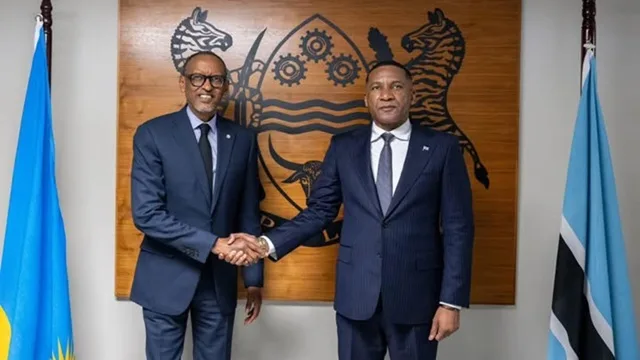
Botswana and Rwanda Can Learn From Each Other’s Meteoric Rise
Botswana is consistently rated as one of the top economies in Africa thanks to its astute management of its diamond industry, while Rwanda displayed resilience, strength and determination to rise back from the genocide.
During a state visit to Botswana from 6 to 7 May 2026, President Paul Kagama praised his counterpart Duma Boko for the level of development of Botswana and saw much merit for both countries — two of the most dynamic economies in Africa — to learn from each other.
“Botswana has a lot to learn from Rwanda. And Botswana has a few lessons of her own to impart to Rwanda. This high-level engagement we had in different sectors: education, health, agriculture and food security, youth empowerment, sports development, employment creation, infrastructure development and regional connectivity, mean we should work closely with each other.”
Botswana President Duma Boko
“What defines the relationship with Rwanda and Botswana is not only friendship but also a shared sense of purpose. This is evident in the way we work together in our commitment to practical outcomes across areas such as air connectivity, visa facilitation, and double taxation. The objective is to remove barriers and create a more predictable environment for investment and collaboration.”
Rwanda President Paul Kagame
During the visit, Kagame has the opportunity to visit De Beers’ global diamond hub. The world’s largest diamond producer De Beers sources 70% of its diamonds from Botswana. The company has one of the largest and most advanced diamond operations in Botswana, capable of handling up to 45 million carats annually. Diamonds and other gemstones account for nearly 25% of Botswana 25%, but Boko is in the midst of diversifying the economic base to be more resilient.
On the other hand, Rwanda has been able to elevate itself as a services-driven economy whereby trading, tourism and ICT account for more than half of Rwanda’s national #GDP. Thanks to its business climate and good governance, Rwanda has emerged as a key trading hub for #CriticalMinerals, such as coltan (Tantalum), wolframite (Tungsten), and cassiterite (Tin), from surrounding countries in East and Central Africa.
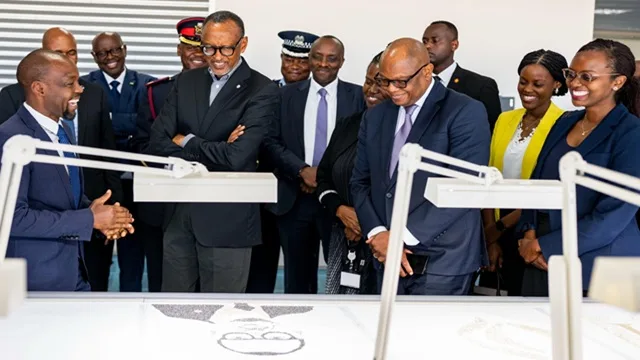
The two sides signed six agreements as follows:
1. Mutual Visa Abolition. This agreement allows for visa-free travel for holders of diplomatic, official, and ordinary passport holders with immediate effect to boost people-to-people (P2P) exchanges and tourism.
2. Double Taxation Avoidance Agreement (DTAA). This treaty ensures that both individuals and corporations in both jurisdictions are not taxed twice on the same income and aims to promote multinational companies in both countries.
3. Bilateral Air Service Agreement (BASA). This agreement aims to improve air connectivity between Gaborone and Kigali, to make it more convenient for both passengers and cargo.
4. BITC and RDB Cooperation. The Botswana Investment and Trade Center (BITC) and the Rwanda Development Board (RDB) are two national trade and investment promotion agencies; they will collaborate by exchanging information and coordinating on policies related to investments, incentives and digital trade.
5. Boost and Monitor Trade and Investment. This MoU provides a framework to foster economic cooperation by monitoring and promoting bilateral trade volumes and investment flows.
6. Health & Pharma. This MoU includes sharing medical expertise and collaboration on the pharma value chain, which was a key issue during the #COVID19 pandemic.
In preparation for the Presidential Summit, the two countries held the 2nd session of the Joint Permanent Commission on Cooperation (JPCC) and the 2nd Botswana-Rwanda Business Forum to take stock of current partnerships and explore further cooperation.